
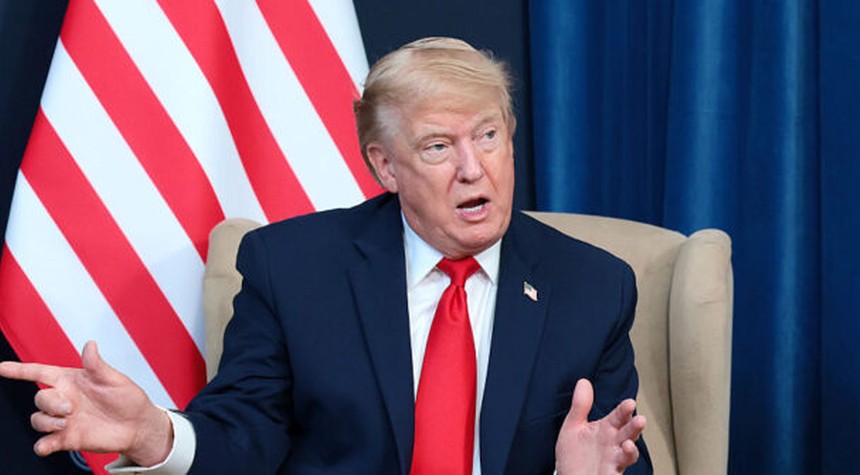
President Donald Trump signaled a renewed diplomatic push to end the war in Ukraine during meetings at the G7 summit in Evian, France, declaring that with the Iran situation now “in the rear view mirror,” his administration would concentrate on achieving peace in Eastern Europe.
The President’s commitment to resolving the conflict became evident on the summit’s second day when the main multilateral session was delayed nearly an hour. The reason soon became clear: President Trump, French President Emmanuel Macron, and Ukrainian President Volodymyr Zelensky were engaged in unscheduled discussions while other world leaders waited in the conference room.
Speaking during a bilateral meeting with the Emir of Qatar on Tuesday morning, President Trump addressed the human cost of the ongoing conflict with characteristic directness. “Look, Russia should make a deal,” the President stated. “Russia’s lost tremendous amounts of people, and so has Ukraine. Last month, they lost 35,000 soldiers between the two of them. Think of that, on a monthly basis they averaged 25,000 people, mostly soldiers, young, beautiful people.”
The casualty figures underscore the urgency driving the President’s diplomatic efforts. The war, now in its fourth year, continues to exact a devastating toll on both nations, with no clear resolution in sight despite various international mediation attempts.
President Trump revealed he had conducted what he described as a “good” meeting with President Zelensky earlier in the day, with plans for additional discussions before the summit concluded. The American leader also confirmed recent conversations with Russian President Vladimir Putin, acknowledging the personal animosity between the two warring leaders represents a significant obstacle to peace negotiations.
“They have a lot of dislike between them that they would have to get over,” Trump observed, pointing to one of the fundamental challenges facing any potential settlement.
President Zelensky, for his part, expressed gratitude to assembled world leaders for what he termed “strong ideas on how to force Russia into peace.” The Ukrainian leader outlined specific military and economic needs, including additional air defense missiles and a comprehensive winter support package. He emphasized that implementation of promised support remained crucial, stating firmly that “Russia must come to learn that its war will never be normalized.”
The diplomatic maneuvering at Evian highlights the complex dynamics at play. Russia itself remains excluded from the summit, having been removed from what was then the G8 following its 2014 annexation of Crimea. This absence complicates direct negotiations but has not prevented President Trump from maintaining separate channels of communication with Moscow.
The President’s comment about Iran moving to “the rear view mirror” suggests a significant shift in immediate American foreign policy priorities. While the administration’s recent focus on Iran consumed considerable diplomatic energy, the pivot back to Ukraine indicates confidence that the Middle Eastern situation has stabilized sufficiently to allow renewed attention on the European conflict.
Whether this renewed focus will yield substantive progress toward ending the war remains uncertain. Both Russia and Ukraine have demonstrated entrenched positions, and the personal tensions between Putin and Zelensky that President Trump acknowledged represent genuine impediments to meaningful dialogue. Nevertheless, the American President’s willingness to engage both sides directly, combined with the platform provided by the G7 summit, offers a framework for potential diplomatic breakthroughs in the months ahead.
Related: Israeli Strike on Beirut Complicates Emerging Iran-US Peace Framework