
The United States government finds itself at the center of mounting controversy over reported negotiations to secure long-term access to Venezuela’s substantial petroleum reserves, raising fundamental questions about American interests and constitutional legitimacy in the war-torn South American nation.
Multiple reports this week indicate the Trump administration has entered advanced discussions with Venezuelan officials regarding direct American stakes in more than a dozen oilfields containing approximately ninety billion barrels of crude oil. This represents nearly one-third of Venezuela’s total proven reserves, which at three hundred three billion barrels constitute the largest such deposits in the world, surpassing even Saudi Arabia’s two hundred sixty-eight billion barrels.
The negotiations follow January’s dramatic special forces operation in Caracas that resulted in the capture of Venezuela’s authoritarian president, Nicolás Maduro. Since that intervention, Venezuela has been governed by interim president Delcy Rodríguez, who previously served as Maduro’s vice-president and petroleum minister.
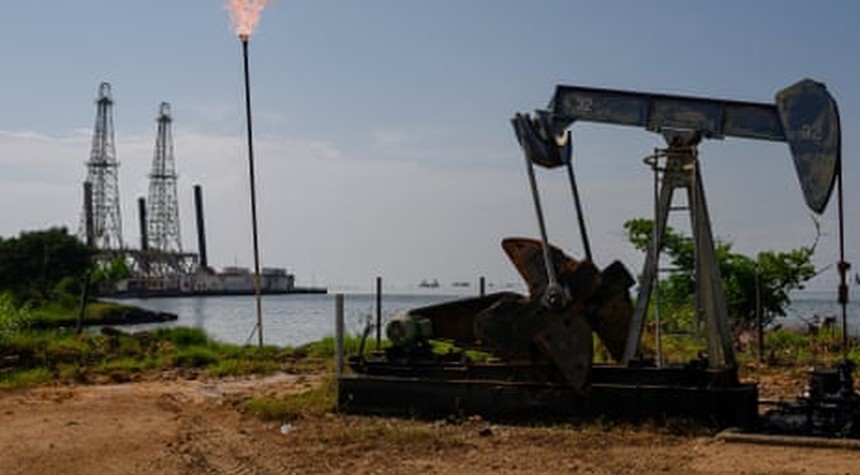
According to sources familiar with the discussions, the proposed arrangements would grant the United States access to oilfields in the strategically vital Orinoco Belt and Lake Maracaibo regions. One proposal under consideration involves a one-hundred-year lease on several major fields.
The scope of these negotiations has generated significant concern among Venezuelan opposition figures who had anticipated American intervention would usher in genuine democratic reform. Instead, they observe key members of Maduro’s former regime retaining positions of authority, including interior minister Diosdado Cabello, who continues collaboration with American officials despite carrying a twenty-five million dollar bounty for alleged narcotics trafficking.
Perhaps most troubling to democracy advocates, opposition leader María Corina Machado remains sidelined. Her movement is widely believed to have won Venezuela’s disputed 2024 presidential elections, yet she has been excluded from the interim governing structure.
Ricardo Hausmann, a former Venezuelan minister now in exile, characterized the proposed arrangements as constitutionally dubious. He argues that an interim government of questionable legitimacy lacks authority to execute such consequential agreements regarding national resources.
Francisco Rodríguez, a respected economist, has called upon Venezuela’s national assembly to reject what he terms a “predatory deal,” urging legislative resistance to arrangements negotiated without proper democratic authorization.
Opposition voices, speaking anonymously due to the delicate nature of criticizing American policy, have drawn unfavorable historical comparisons. Where previous generations might have expected American engagement reminiscent of the Marshall Plan’s reconstructive spirit, current developments appear to some as extractive rather than restorative.
The situation presents a complex challenge for American foreign policy. Venezuela’s energy reserves represent an extraordinary strategic asset at a time of global petroleum market volatility. Securing reliable access to such resources carries obvious national interest implications for the United States.
However, the legitimacy questions surrounding both the interim Venezuelan government and the constitutional authority to execute century-long resource agreements cannot be dismissed lightly. The success of any such arrangement depends not merely on favorable terms but on foundations of legitimate authority that can withstand political transitions and legal scrutiny.
The coming weeks will reveal whether these reported negotiations advance to formal agreements, and whether the Trump administration can address the substantial legitimacy concerns raised by Venezuelan democratic opposition figures whose support was presumably a cornerstone of American intervention objectives.
Related: Search Continues for 2,000 Missing After Nepal-Tibet Flash Flood Disaster