
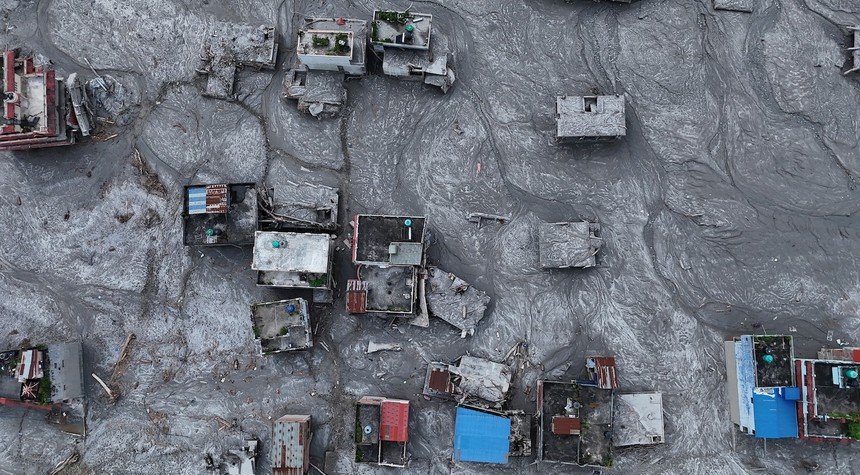
The grim task of recovery continues in the Himalayan border region between Nepal and Tibet, where the death toll from Wednesday’s catastrophic flash flooding has reached 543, with more than 2,000 people still unaccounted for as of Friday.
What began as a seismic rumble in the early morning hours has transformed into one of the deadliest natural disasters to strike the region in recent memory. The wall of water that descended from the mountains carved a path of destruction extending at least 62 miles downriver from the Nepal-China border, burying buildings, destroying critical infrastructure, and leaving thousands of families waiting for news of missing loved ones.
Authorities in Nepal report that 579 people have perished within their borders, while Chinese officials in Tibet have confirmed five deaths. The human toll continues to mount as search teams navigate treacherous terrain and damaged roadways. Nepal has mobilized 8,380 police personnel to the affected areas, where rescue operations have so far saved 4,451 injured individuals, including 129 foreign nationals.
Among those missing are 90 American citizens. The State Department confirmed Friday that five Americans have been successfully evacuated from the disaster zone, an increase from three the previous day. The fluctuating numbers of missing persons reflect both the chaos on the ground and the acceleration of recovery efforts as access to remote areas improves.
The catastrophe struck at approximately 8:40 a.m. local time Wednesday in Nepal’s northern Rasuwa district. What witnesses captured in dramatic video footage was the culmination of a massive geological event that began some 12 miles northeast of the Rasuwagadhi border post. A landslide of extraordinary magnitude, initially measuring 5.2 on seismic scales and mistakenly reported as an earthquake, triggered the deadly flood that followed.
The mechanics of this disaster reveal nature’s terrible power. Geophysicists examining the evidence believe a landslide in the Himalayas dislodged a substantial glacier, or significant portions of one, from a cliff face standing approximately 16,000 feet above sea level. The resulting debris avalanche plummeted 6,000 feet down the mountainside, carrying with it an estimated 100 million cubic meters of ice, rock, and debris, according to preliminary assessments from the United States Geological Survey.
The Trishuli River became the conduit for this destruction, its waters suddenly transformed into a devastating torrent that swept away everything in its path. Bridges that had connected communities for decades were reduced to twisted metal and concrete. Roadways simply disappeared. Buildings that had sheltered families for generations were buried under tons of debris.
As rescue workers continue their painstaking search through the rubble and along riverbanks, families around the world wait for news. The international dimension of this tragedy reminds us that natural disasters recognize no borders, and that Americans abroad remain vulnerable to forces beyond any nation’s control.
The investigation into what initially triggered the landslide continues, though the remote location and extensive damage complicate efforts to determine the precise sequence of events. What remains clear is that the Himalayan region, magnificent in its beauty, has once again demonstrated its capacity for sudden and devastating violence.
Related: Nuclear Security Administration Prevents Potential Dirty Bomb Material from Theft