
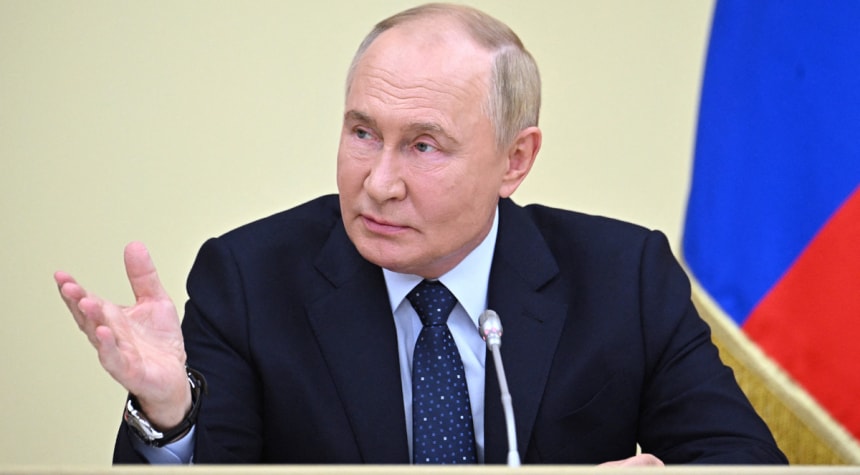
Hours after Russian President Vladimir Putin appeared alongside President Donald Trump and Chinese President Xi Jinping at what was characterized as a historic summit in China, Moscow unleashed one of its most devastating attacks on Ukraine since the war began. At least eight people were killed as Russian forces struck three major bridges in Kyiv and sent missiles and a drone into NATO member Poland.
The massive overnight assault Friday revealed a troubling disconnect between the diplomatic optimism emerging from Thursday’s meetings and the brutal reality unfolding on the battlefield. Even as the Trump administration announced progress toward expanding peace negotiations with Russia, Putin’s military machine demonstrated no apparent inclination toward restraint.
A European intelligence source has indicated that Putin is preparing an intensified winter military campaign. The Russian calculation, according to this assessment, is straightforward and deeply troubling. Moscow believes that sustained battlefield pressure combined with American-led diplomatic negotiations will eventually force Ukraine to surrender additional territory. The strategy appears designed to present Ukrainian leaders with a stark choice between continued devastation and territorial concessions.
The source described the photograph of Putin standing alongside Trump and Xi as a long-sought diplomatic achievement for the Russian leader. Yet this diplomatic milestone appears to have done nothing to moderate Russian military operations. According to the intelligence assessment, Russia believes Ukraine could be compelled to accept territorial losses by spring, particularly in the country’s eastern regions.
"They are very convinced that by spring Ukrainians will give up," the source reported, describing Moscow’s strategic thinking. The source also warned that Russian military pressure is intensifying despite Ukraine’s recent successful strikes against critical Russian infrastructure. "It’s going to be a very difficult winter for Ukrainians," the source stated.
Retired General Philip Breedlove, who served as NATO Supreme Allied Commander Europe, offered a blunt assessment of the timing. The pattern is unmistakable, he argued. Putin has repeatedly responded to President Trump’s diplomatic overtures with renewed violence against Ukraine. "Putin never has been a partner for peace in Ukraine," Breedlove said. "And Putin will never be a partner for peace in the future for Ukraine."
The former NATO commander described Putin’s ultimate objective as the subjugation of Ukraine, the installation of Moscow-loyal leadership, and the exploitation of Ukrainian resources. It is a vision that leaves little room for compromise.
Ukrainian President Volodymyr Zelenskyy reported that Russia fired more than 400 drones and over 110 missiles, including 27 ballistic missiles. The targets included energy facilities, transportation networks, and logistical infrastructure. Six people died in Kyiv and two in the western city of Lviv, with more than two dozen others wounded.
Three major bridges spanning the Dnipro River in Kyiv sustained damage, disrupting transportation between the eastern and western sections of the capital. The strikes also damaged railway infrastructure and energy facilities, triggering emergency power outages as winter temperatures descend upon the region. In Lviv, two people were killed at the Sknyliv railway station.
Russia’s Defense Ministry confirmed carrying out what it termed a massive operation, claiming it targeted facilities connected to Ukraine’s military-industrial complex. The competing claims about targets and damage could not be independently verified, though the human toll is documented and undeniable.
The strikes followed Putin’s warning Thursday that Russia would retaliate against Ukraine for repeated attacks on the Kerch Bridge, which connects Russia with the occupied Crimean Peninsula. Ukrainian forces have launched three attacks on this strategic crossing in four days. The bridge, inaugurated by Putin in 2018, serves as both a vital transportation route and a powerful symbol of Moscow’s control over Crimea, annexed by Russia in 2014.
The overnight assault also raised serious concerns beyond Ukraine’s borders. Polish officials reported three separate incursions into the country’s airspace. Polish Defense Minister Władysław Kosiniak-Kamysz identified one object as a Russian Kh-101 cruise missile, while another was believed to be a missile and the third likely a jet-powered drone. Authorities investigated debris near three locations in southeastern Poland.
Poland has indicated it will seek additional NATO assistance to secure the alliance’s eastern flank. The incursions into Polish territory represent a dangerous escalation with potentially far-reaching implications for the entire alliance.
General Breedlove warned that these reported airspace violations fit a broader pattern of Russia testing NATO’s resolve. "Mr. Putin will push further and further when there is no cost to him," he stated. "When NATO doesn’t respond, when the United States doesn’t respond, in his mind, there is no reason to stop. He will continue."
The events of this week present American policymakers with a fundamental question about the nature of diplomatic engagement with Moscow. Can meaningful peace negotiations proceed while Russia simultaneously prosecutes an intensifying military campaign? The answer may determine not only Ukraine’s future but the credibility of Western diplomacy itself.
Related: TikTok Parent Company Seeks Half Billion Dollars in Microsoft AI Services Despite Security Concerns