
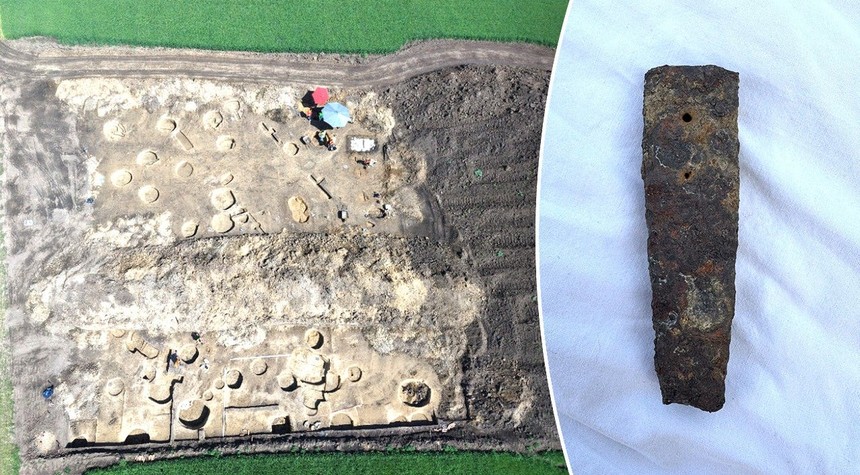
Archaeologists in the Czech Republic have unearthed more than one thousand ancient artifacts during excavations conducted ahead of planned high-speed railway construction, marking one of the more significant archaeological discoveries in Central Europe this year.
The Archaeological Center Olomouc announced the findings in April, detailing the recovery of items spanning from the Early Bronze Age through the Roman era. The excavations took place along a three-quarter-mile stretch between the towns of Nezamyslice and Kojetín in the Haná River valley, where construction crews will eventually lay track for a modern high-speed rail line.
Among the discoveries, researchers identified a particularly rare Roman-era tool used in the production of metal wire. Such implements remain uncommon finds in archaeological digs, providing valuable insight into the manufacturing techniques employed by craftsmen nearly two millennia ago. The presence of Roman-era artifacts in this region underscores the extensive reach of Roman trade networks and cultural influence throughout Central Europe during the empire’s height.
The excavation work proceeded between April and October, with archaeologists racing against construction timelines to document and preserve the historical record before modern development transforms the landscape. This scenario has become increasingly common across Europe, where infrastructure projects frequently intersect with layers of human history buried beneath centuries of accumulated soil.
The discoveries in the Czech Republic follow similar archaeological work elsewhere in Europe. Belgium’s SOLVA Archaeology Service recently announced findings in Velzeke, including well-preserved Roman artifacts and remains. These parallel discoveries across different European nations continue to expand our understanding of ancient civilization’s geographic scope and the daily lives of people who inhabited these regions thousands of years ago.
The Haná River valley location proves particularly rich in archaeological significance. The valley served as a natural corridor for ancient peoples, facilitating trade and migration across Central Europe. The range of artifacts recovered, spanning multiple historical periods, suggests continuous or repeated human settlement in this area over millennia.
Modern infrastructure development presents both challenges and opportunities for archaeological research. While construction threatens to destroy irreplaceable historical sites, the legal requirements for archaeological surveys before major projects have led to numerous important discoveries that might otherwise have remained hidden indefinitely. The Czech findings represent this productive tension between progress and preservation.
The recovered artifacts will undergo further study and conservation treatment before eventual display, allowing both researchers and the public to examine these tangible connections to ancient civilizations. Such discoveries remind us that beneath the surface of our modern world lies evidence of countless generations who preceded us, each leaving their mark on the landscape we now inhabit.
The high-speed railway project will proceed as planned, but not before archaeologists have completed their vital work of documenting and preserving these remnants of our shared human heritage.
Related: Ebola Outbreak in Congo Claims Over 130 Lives as American Physician Falls Ill