
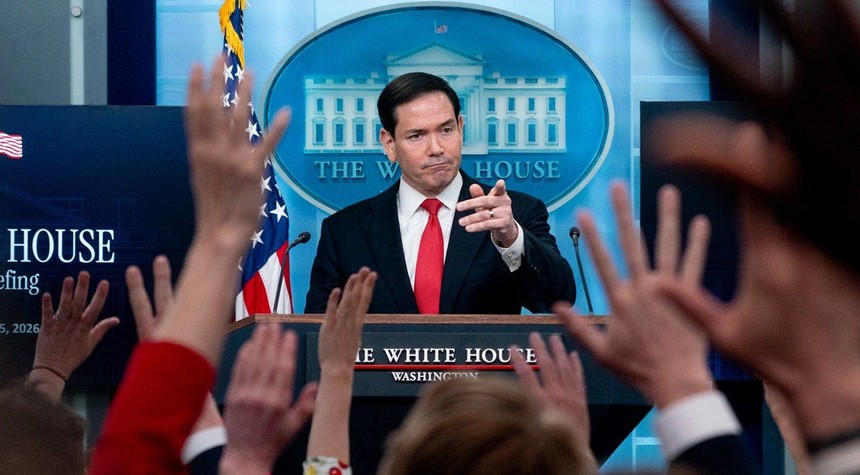
Secretary of State Marco Rubio delivered a comprehensive preview of his upcoming diplomatic mission to Rome during a White House press briefing Tuesday, addressing mounting international tensions while demonstrating the steady hand that has characterized America’s top diplomatic office throughout its history.
The Secretary’s remarks came as he prepares for what promises to be a diplomatically delicate journey to the Vatican and Italy, scheduled to begin Thursday. The trip occurs against a backdrop of reported friction between President Donald Trump, Pope Leo, and Italian Prime Minister Giorgia Meloni regarding the administration’s approach to Iran.
Speaking from the James Brady Press Briefing Room, Rubio sought to frame the visit as routine diplomatic engagement rather than crisis management. “The trip is really not tied to anything other than the fact that it would be normal for us to engage, and other secretaries of state have done that in the past,” he stated, emphasizing continuity with established diplomatic protocols.
However, the timing cannot be ignored. The administration faces questions from European allies about its escalating pressure campaign against Tehran, and the Vatican has reportedly expressed concerns about the potential for broader regional conflict. Italy, a key NATO partner and traditional American ally in the Mediterranean, finds itself positioned between supporting Washington and maintaining its own strategic interests in the Middle East.
Rubio used the briefing platform to deliver unambiguous warnings to Iran, making clear that the United States has no intention of softening its stance despite international pressure. The Secretary’s command of the podium and his ability to articulate the administration’s position drew favorable notice from supporters who see in him the kind of principled diplomacy America requires in these uncertain times.
The substance of Rubio’s upcoming meetings in Rome remains significant. Discussions with Vatican officials will likely center on the Church’s traditional role as an advocate for peaceful conflict resolution, while conversations with Italian leadership will address NATO cohesion and European security concerns in an era of multiple global flashpoints.
What emerges from Tuesday’s briefing is a picture of an administration determined to maintain its course on Iran policy while simultaneously managing relationships with traditional allies who may harbor reservations about American strategy. This represents the eternal challenge of American statecraft: pursuing national interests while preserving the alliances that have underwritten Western security for generations.
The Secretary’s performance at the podium recalled the importance of clear communication in moments of international tension. In an age of instant global communication and rapid-fire social media commentary, the measured delivery of America’s diplomatic position serves as a reminder that some things in statecraft remain constant, even as the tools and pace of diplomacy evolve.
As Rubio prepares to depart for Rome, the success of his mission will be measured not merely in what is said during formal meetings, but in whether the United States can maintain both its principled stance toward Iran and its vital partnerships across the Atlantic. That is the balance that has always defined effective American diplomacy, and it is the balance this administration must now strike in the days ahead.
Related: Citadel CEO Shifts Investment Focus to Miami After New York Tax Proposal