
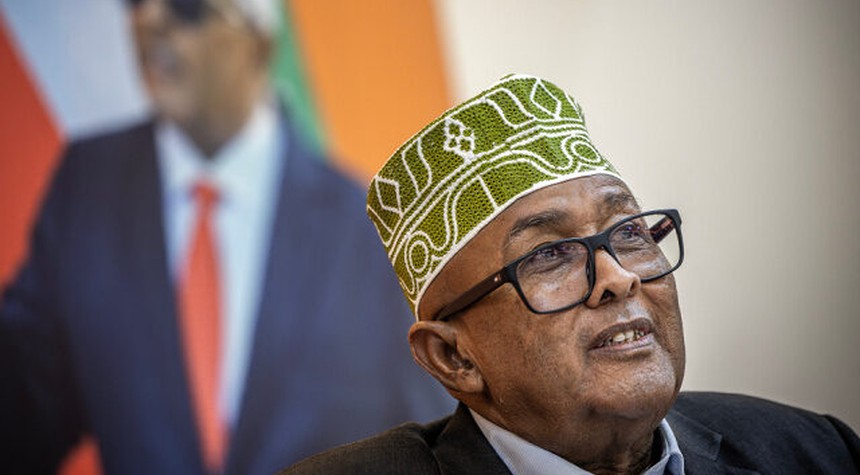
NEW YORK — In the corridors of international diplomacy during the recent United Nations General Assembly, a quiet but significant campaign is underway. Somaliland, a self-declared independent state operating within Somalia’s internationally recognized borders, is seeking something that has eluded it for over three decades: formal recognition as a sovereign nation.
President Abdirahman Mohamed Abdullahi, known as “Irro” among his constituents, made his case directly during the assembly’s proceedings in New York. Speaking from his Manhattan hotel suite, the Somaliland leader positioned his nation as a potential strategic partner for the United States in one of the world’s most volatile regions.
“President Trump is a great man,” Abdullahi stated. “He made history, and he could make more history by recognizing a new country called Somaliland, which will cooperate unconditionally in the fight against terrorism, in the fight against piracy, in the fight for marine security, and safer world trade routes as well, in a strategic, very important location.”
The facts on the ground are these: Somaliland has functioned as a de facto independent state since declaring separation from Somalia in 1991. While Somalia has struggled with terrorism from groups like al-Shabaab, widespread corruption, and endemic piracy threatening international shipping lanes, Somaliland has maintained relative stability and democratic governance. The contrast is stark and measurable.
In late 2025, Israel became the first nation to formally recognize Somaliland’s independence, a development that signals shifting diplomatic alignments in the region. That recognition, while significant, remains singular. The broader international community has yet to follow suit.
Abdullahi’s pitch centers on strategic geography and practical cooperation. The port city of Berbera, he notes, has already become essential to international shipping companies seeking to avoid instability elsewhere in the region. Major cargo operations are currently using Berbera as a transshipment point, moving goods through the facility before continuing to final destinations.
“Berbera has a very strategic location, and now, because of the certain conditions in the world which now exist regarding the war, even some of the world’s largest shipping companies now use Berbera to bring their goods, and later they ship again to their destinations because of security reasons,” the president explained. “Berbera’s need and demand is increasing, and Berbera is a viable port that can handle large containers as well.”
Beyond seeking recognition, Abdullahi has publicly endorsed President Trump for the Nobel Peace Prize, citing the American president’s efforts to resolve conflicts globally, including the longstanding war between the Democratic Republic of Congo and Rwanda. “I may be on the record that I am the first African leader to refer the president for a Nobel Peace Prize,” Abdullahi said, “because so far for the short time he has been in office, he has resolved many conflicts in the world.”
During his American visit, Abdullahi met with members of Congress, senators, and State Department officials. He described the reception as cordial and the discussions as productive, though no formal commitments toward recognition have emerged from Washington.
The question facing American policymakers is whether recognizing Somaliland serves strategic interests or creates complications in an already complex region. Somaliland offers stability, functioning ports, and professed alignment with Western interests. Recognition, however, would set a precedent regarding secessionist movements and could strain relationships with Somalia and other African nations wary of territorial fragmentation.
That is the way it is, and these are the considerations as this diplomatic initiative continues.
Related: Thirty-Two Nations Condemn Iran After Thwarted Plot at US Military Base in England