
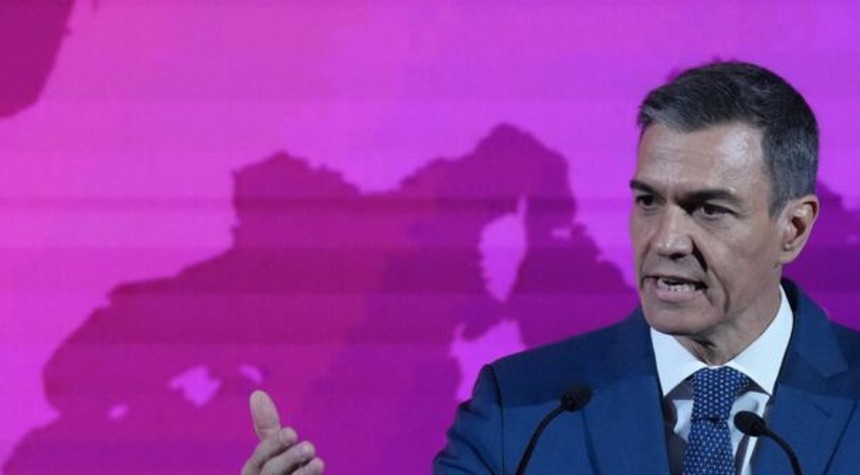
Spain’s Prime Minister Pedro Sánchez delivered a striking call for Western nations to surrender their positions of influence within international institutions, making his demands not from Madrid or Brussels, but from Beijing itself.
During a four-day diplomatic visit to China, Sánchez addressed students and faculty at Tsinghua University in the Chinese capital Monday morning, where he advocated for what he termed the relinquishing of “participation quotas” held by Western nations. These positions, he argued, should be transferred to countries of the so-called Global South.
The Spanish prime minister’s remarks came as he embarked on his fourth visit to China in as many years, a frequency that underscores the socialist leader’s prioritization of relations with the world’s most populous communist state. His itinerary includes meetings with Chinese President Xi Jinping and other senior officials of the Chinese Communist Party.
According to reports from the Spanish newspaper ABC, Sánchez characterized his own nation as one “that recognizes that China is rebuilding its greatness” and stated that China “is destined to play a vital role in the future.” These declarations drew praise from Tsinghua University Vice President Yang Bing, who commended Sánchez for “always prioritizing the development of Spain’s relations with China.”
The timing and location of Sánchez’s remarks warrant careful consideration. That a leader of a NATO member state and European Union nation would advocate for diminished Western influence from Beijing represents a notable diplomatic posture. The international institutions in question typically include bodies such as the United Nations Security Council, the International Monetary Fund, and the World Bank, where Western nations have historically maintained significant representation and voting power.
The concept of the Global South, while imprecise, generally refers to developing nations in Latin America, Africa, Asia, and Oceania. Proponents of increased representation for these nations argue that post-World War II international structures reflect an outdated global order. Critics counter that such institutions have provided stability and that calls for restructuring often emanate from authoritarian regimes seeking to dilute Western democratic influence.
Sánchez’s visit occurs against a backdrop of intensifying great power competition between the United States and China. European nations have faced increasing pressure to clarify their positions regarding Beijing, particularly concerning trade practices, human rights concerns, and the situation in Taiwan.
The Spanish prime minister’s enthusiasm for strengthening ties with China stands in contrast to the more cautious approach adopted by some European counterparts, who have grown increasingly wary of economic dependence on Beijing and concerned about China’s support for Russia amid the ongoing conflict in Ukraine.
Whether Sánchez’s proposal gains traction among other Western leaders remains to be seen. What is certain is that his willingness to make such pronouncements while standing on Chinese soil will fuel ongoing debates about Europe’s strategic direction and the wisdom of accommodating authoritarian powers in the restructuring of global governance.
And that is the way it is.
Related: Irish Actor Michael Patrick Dies at 35 After Battle with Motor Neurone Disease