
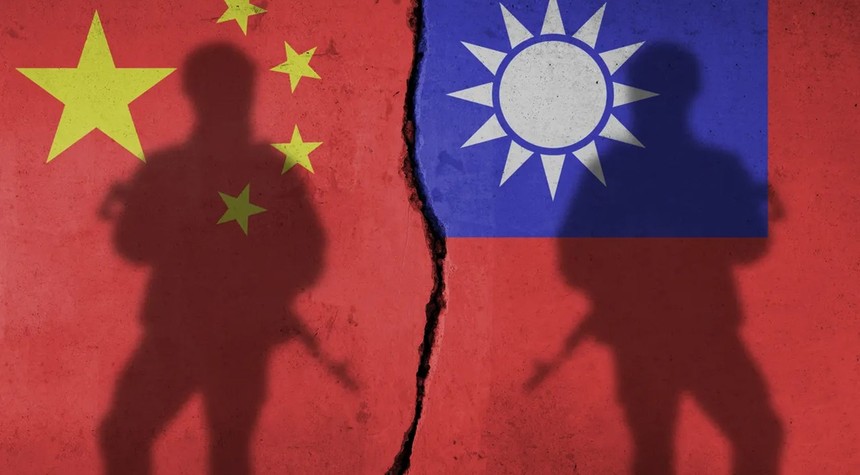
Taiwan’s foreign minister has issued a stark warning about China’s increasingly aggressive military posture, characterizing Beijing as a destabilizing force threatening not merely the Taiwan Strait but global peace.
Foreign Minister Lin Chia-lung, in direct comments to reporters, described China as having “clearly become a troublemaker that is maliciously attempting to disrupt the cross-strait status quo and intimidate peaceful countries.” His assessment comes amid mounting evidence of Chinese military expansion throughout the Indo-Pacific region.
The minister’s concerns center on what he termed China’s “authoritarian expansionism,” which he said directly threatens Taiwan’s security and democratic system while posing significant challenges to peace and stability across the Indo-Pacific region and beyond.
Lin pointed to specific military developments that underscore the gravity of the situation. Last June, Chinese aircraft carriers Liaoning and Shandong conducted operations beyond the second island chain, representing the first time Beijing deployed two carriers simultaneously into the Western Pacific. This maneuver, according to Lin, demonstrates that China’s expansionist ambitions extend far beyond Taiwan itself.
The second island chain, a strategic concept in Pacific naval operations, runs from Japan through the Mariana Islands to Indonesia. China’s ability to project power beyond this line represents a significant escalation in its military capabilities and strategic reach.
These developments come as Taiwan faces increasing pressure from Beijing, which has never renounced the use of force to bring the democratic island under its control. Chinese military exercises near Taiwan have intensified in recent years, with some Taiwanese military officials suggesting these drills could serve as preparation for a potential blockade or military action.
The implications extend well beyond the immediate region. The Taiwan Strait serves as a critical waterway for international commerce, and any military conflict would have far-reaching consequences for the global economy. Furthermore, Taiwan’s position as a leading semiconductor manufacturer makes its security a matter of international economic concern.
Lin’s characterization of China as a global troublemaker reflects Taiwan’s broader diplomatic strategy of framing its security concerns within the context of international stability. By emphasizing that Beijing’s actions threaten not merely Taiwan but the entire Indo-Pacific region and beyond, Taiwanese officials seek to build international support for their position.
The minister’s comments also highlight the challenge facing democratic nations as they confront an increasingly assertive China. Beijing’s military modernization has proceeded at a remarkable pace, with its navy now the largest in the world by hull count. The simultaneous deployment of two aircraft carriers represents just one example of China’s growing ability to project power far from its shores.
As tensions continue to simmer in the Taiwan Strait, the international community watches carefully. The United States maintains a policy of strategic ambiguity regarding Taiwan’s defense, while also providing the island with defensive weapons. How this delicate balance holds in the face of China’s military expansion remains one of the most consequential questions in international affairs.
Related: Trump Pledged Support for Israeli Strikes on Iran During December Meeting