
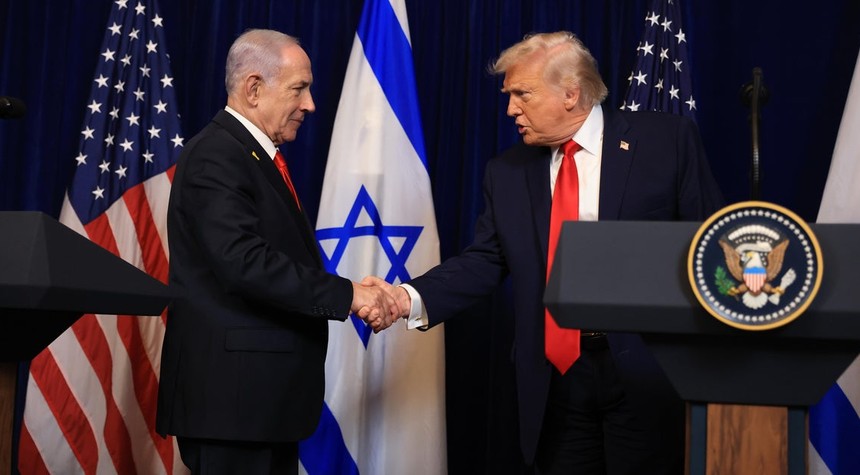
President Trump assured Israeli Prime Minister Benjamin Netanyahu during a December meeting at Mar-a-Lago that the United States would support Israeli military strikes against Iran’s ballistic missile program should diplomatic negotiations fail to produce an agreement. Two sources familiar with the discussion have confirmed this commitment, speaking on condition of anonymity due to the sensitive nature of national security matters.
In the two months since that meeting, senior officials within the United States military and intelligence community have begun serious deliberations about supporting a potential Israeli operation against Iranian targets. These internal discussions have progressed beyond the question of whether Israel might act to the more practical considerations of how American forces could provide assistance.
The planning under consideration includes aerial refueling capabilities for Israeli aircraft and the diplomatically complex task of securing overflight permissions from nations along the strike route. Two additional United States officials with direct knowledge of these discussions have confirmed that such operational details are now being examined at the highest levels of the national security establishment.
The diplomatic challenges are considerable. Jordan, Saudi Arabia, and the United Arab Emirates have all issued public statements declaring they would not permit their airspace to be used for strikes against Iran or for Iranian retaliation against other nations. Which countries, if any, might grant such permissions for American refueling operations remains unclear.
These planning discussions have coincided with a substantial American military buildup in the Middle East. The USS Gerald R. Ford, a second aircraft carrier, along with its accompanying strike group, has been ordered to redeploy from the Caribbean to the region. Four United States officials confirmed this deployment, which will add considerable firepower to an already significant American naval presence within range of Iran.
This military posturing proceeds even as the Trump administration pursues diplomatic channels with Tehran. The contradictions inherent in this dual approach reflect the delicate balance Washington seeks to maintain between deterrence and negotiation.
Prime Minister Netanyahu remains publicly skeptical of any diplomatic resolution with Iran. He traveled to Washington last week for direct consultations with President Trump, subsequently issuing statements demanding that any agreement with Iran must address not only nuclear development but also ballistic missile capabilities and Iranian funding of proxy forces throughout the region. These additional requirements would substantially expand the scope of any potential accord beyond nuclear matters alone.
Iranian officials have indicated a measured willingness to limit uranium enrichment activities in exchange for relief from the economic sanctions that have severely constrained their economy. However, the precise terms of such an arrangement remain undefined, and no written agreement has emerged from preliminary discussions.
The United States and Iran are scheduled to conduct a second round of nuclear negotiations in Geneva on Tuesday. Iranian state media has reported that Foreign Minister Abbas Araghchi and his delegation have departed for Switzerland, where indirect talks will attempt to forge an agreement that prevents military conflict.
Secretary of State Marco Rubio stated Sunday that he has made clear his preference for a diplomatic resolution to the Iranian nuclear question, confirming that United States envoy Steve Witkoff continues to pursue negotiations.
The situation presents a familiar pattern in American Middle Eastern policy: the simultaneous pursuit of diplomatic solutions while preparing military options should those negotiations fail. Whether this approach will yield a peaceful resolution or escalate toward military confrontation remains the central question facing policymakers in Washington, Jerusalem, and Tehran.
Related: Former Vice President Commends Community Resistance to ICE Operations in Minnesota