
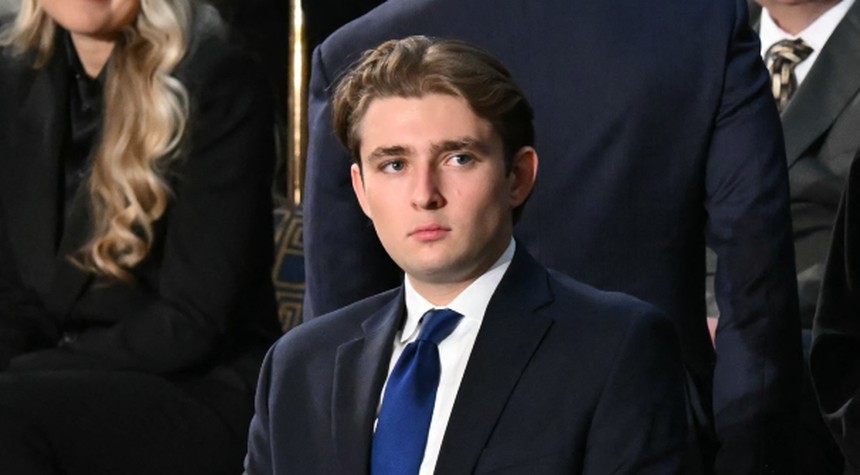
Iranian state television has crossed a disturbing threshold in its ongoing campaign of threats against American officials, broadcasting a three-minute segment that detailed plans to assassinate Barron Trump, the 20-year-old son of President Donald Trump.
The broadcast, which aired on an Iranian state television outlet, carried the title “Where to Kill Barron Trump?” and featured what observers described as unusually explicit content for state-sponsored media. The segment included stylized graphics depicting surveillance methods, online activity monitoring, and analysis of individuals in the young Trump’s daily life. It concluded with claims that many would pursue a $10 million bounty for carrying out such an attack.
According to reports from dissident sources monitoring Iranian media, the broadcast attempted to map social connections surrounding the President’s son and outlined methods to penetrate the layers of Secret Service protection assigned to him. The video displayed purported locations and online platforms associated with these efforts, though none of the specific claims regarding an active plot could be independently verified.
The segment showed animated graphics claiming to represent Barron Trump’s frequent locations, daily routines, and personal interests, including activities such as playing video games and socializing with friends. One individual was named in the broadcast, though it remains unclear whether this person actually exists or was used merely for illustrative purposes. The video identified Barron Trump’s primary residence as a student dormitory at New York University’s Washington campus, where he is currently enrolled.
In characteristic fashion for Iranian propaganda videos, the segment featured elaborate computer graphics that purportedly pinpointed the locations of security personnel on campus. However, analysts could not determine whether these depictions reflected actual intelligence gathering by Iranian operatives or were simply produced for dramatic effect.
The decision by Iranian state television to air such material represents a significant escalation, even within the context of Tehran’s long-standing pattern of threats against American officials. For years, Iranian political rhetoric, state-linked media, and public rallies have featured threats against President Trump and other current and former United States government figures, alongside what American authorities have characterized as genuine assassination plots attributed to Tehran.
Previous threats have been directed at both President Trump and First Lady Melania Trump. American prosecutors have accused operatives of Iran’s Islamic Revolutionary Guard Corps, designated as a terrorist organization, of actively plotting to kill current and former American officials.
During the extended state funeral for Ayatollah Ali Khamenei in July, the Iranian regime and its supporters displayed banners and billboards publicly calling for the assassination of President Trump, demonstrating that such threats are not confined to fringe elements but represent official state policy.
The targeting of a President’s family member, particularly a young adult son who holds no official government position, marks a troubling development in the adversarial relationship between Washington and Tehran. It raises serious questions about the safety of American officials and their families, and the willingness of the Iranian regime to observe any boundaries in its hostility toward the United States.
This latest provocation will undoubtedly require a response from American security services and may well influence the administration’s approach to dealing with the Islamic Republic on matters ranging from nuclear negotiations to regional security concerns.
Related: United States Notably Absent as Allies Mark Ukraine Independence Anniversary