
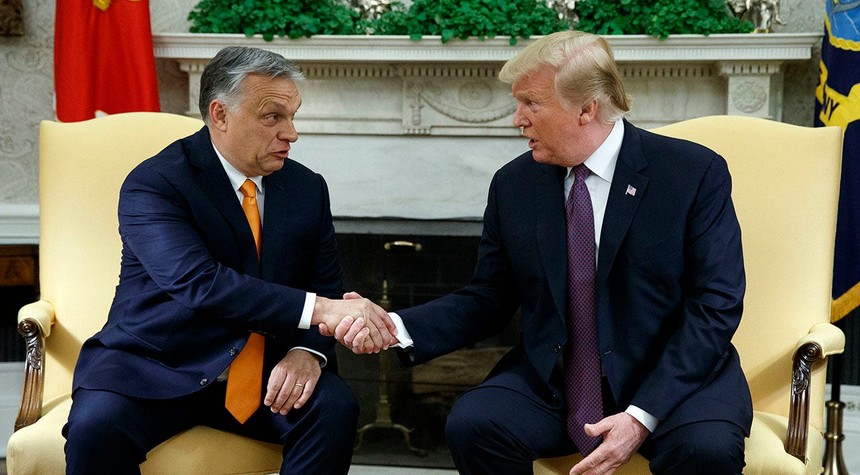
Hungarians voted in record numbers Sunday in what may prove to be the most consequential election in the nation’s recent history, with Prime Minister Viktor Orban facing his most serious challenge after sixteen years in power.
The election has drawn unprecedented international attention, particularly from the United States. Vice President JD Vance traveled to Budapest earlier this week to offer the Trump administration’s explicit support for Orban, a move that underscores the stakes Washington sees in maintaining pro-American leadership in Central Europe.
Orban faces an unexpectedly tight race against Peter Magyar, his former political ally turned opponent. Opinion polls show Orban trailing, a remarkable development for a leader who has dominated Hungarian politics since 2010. The prime minister confronts mounting challenges on multiple fronts: a struggling economy, persistent corruption allegations, and growing public frustration with his governance.
Speaking at the Mathias Corvinus Collegium in Budapest, Vance explained the administration’s rationale for the unprecedented intervention in a European ally’s domestic election. “The reason why we’re doing it is because we thought there was so much garbage happening against Viktor in this election that we had to show that there are actually a lot of people and a lot of friends across the world who recognize that Viktor and his government are doing a good job, and they’re important partners for peace,” Vance said.
The vice president was careful to acknowledge Hungarian sovereignty while making the administration’s preference clear. “Ultimately the Hungarian people are going to be sovereigns because that’s how it should be,” he stated.
The Trump administration’s support for Orban reflects broader frustrations with European allies who have, in Washington’s view, failed to adequately support American strategic priorities. Vance specifically referenced the lack of European assistance in confronting Iran, a pointed criticism that highlights growing transatlantic tensions.
Orban’s critics point to his controversial economic policies and his relationship with Russian President Vladimir Putin as evidence of misplaced priorities. Most notably, Hungary has blocked European Union aid packages to Ukraine, drawing sharp criticism from other EU members and complicating Western efforts to support Kyiv against Russian aggression.
The prime minister’s economic strategy has also come under scrutiny as Hungary grapples with inflation and sluggish growth. These economic headwinds, combined with corruption allegations that Orban’s government has struggled to dispel, have created an opening for Magyar’s challenge.
President Trump himself called into the Budapest event, demonstrating the personal investment both he and his administration have in the outcome. The president’s involvement signals that Washington views this election as more than a routine democratic exercise in a small Central European nation.
Both the United States and European Union are watching the results closely. For Washington, Orban represents a reliable partner willing to chart an independent course from Brussels and maintain strong bilateral ties with America. For Brussels, his potential defeat would remove a persistent obstacle to EU consensus on critical issues ranging from Ukraine to migration policy.
The record turnout suggests Hungarians understand the significance of their choice. Whether they opt for continuity under Orban or change under Magyar will have ramifications extending well beyond Hungary’s borders.
Related: Israeli Forces Report Discovery of Hezbollah Weapons Cache Inside Lebanese Hospital