
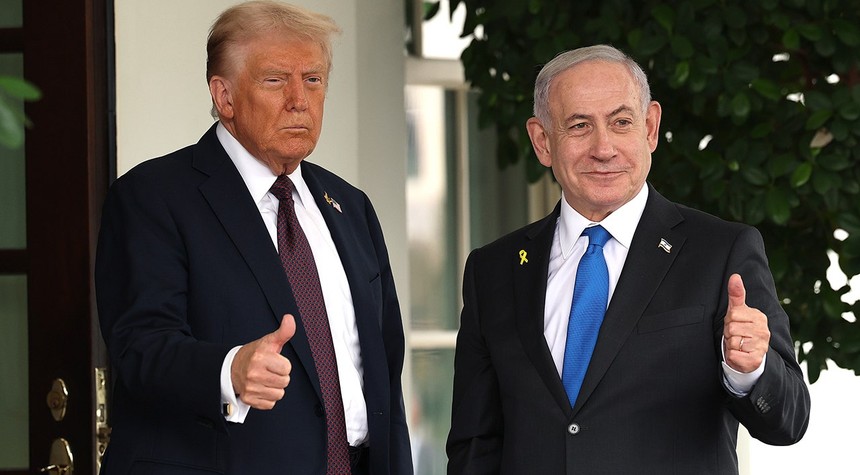
President Donald Trump indicated this week that he is prepared to endorse Israeli Prime Minister Benjamin Netanyahu in Israel’s upcoming elections, while simultaneously calling on the Israeli leader to exercise greater restraint in military operations against Hezbollah forces in Lebanon.
In an interview with Israeli public broadcaster KAN News, the President stated his inclination to support Netanyahu, whom he referred to by the familiar nickname “Bibi,” though he emphasized the need to evaluate all candidates in the race.
“I’ll have to look at who’s running, but I like Bibi very much. I would be most likely to endorse him,” Trump said. “But I need to see who is running.”
The President’s comments come at a time of visible tension between Washington and Jerusalem over Israel’s approach to Iranian-backed militant groups operating in Lebanon. Trump has publicly urged Netanyahu to adopt what he termed a “softer touch” in dealing with Hezbollah, the Iranian-backed terrorist organization that maintains a significant presence in southern Lebanon.
Despite this counsel for moderation, Trump praised Netanyahu’s overall performance while making clear his expectations for the Israeli leader’s approach going forward.
“I have a good relationship with Bibi, but he needs to be more rational,” the President stated. “I am willing to meet with him. He’s doing a very good job; he’s got to be a little bit more rational.”
The President’s willingness to involve himself in Israeli domestic politics represents a continuation of the close relationship between the Trump administration and Netanyahu’s government. However, the public nature of Trump’s criticism marks a notable departure from the typically unified front the two leaders have presented on matters of regional security.
The tensions between the two allies center primarily on the scope and intensity of Israeli military operations against Iranian proxies in the region. While the Trump administration has maintained its strong support for Israel’s right to defend itself against terrorism, officials have grown increasingly concerned about the potential for escalation that could draw the United States into a broader regional conflict.
Netanyahu faces a challenging electoral landscape in Israel, where domestic political divisions and questions about his handling of security matters have created uncertainty about his political future. An endorsement from President Trump could prove significant given the American leader’s popularity among certain segments of the Israeli electorate.
The relationship between Trump and Netanyahu has been characterized by substantial policy alignment on key issues, including the recognition of Jerusalem as Israel’s capital and the normalization agreements between Israel and several Arab nations. However, recent disagreements over Iran policy and military operations in Lebanon have introduced a new complexity to the bilateral relationship.
As Israel approaches its election, the question of American support for Netanyahu’s continued leadership will likely remain a factor in the campaign. The President’s comments suggest that while he maintains personal regard for the Israeli Prime Minister, he expects a recalibration of Israel’s regional military strategy as a condition of his full support.
Related: Migratory Seabird Tests Positive for Avian Influenza in Western Australia