
And that’s the way it is this Independence Day, as Pastor Ezra Jin Mingri walked free from Chinese custody and arrived in Los Angeles to embrace his family after years of imprisonment for his religious activities in Beijing.
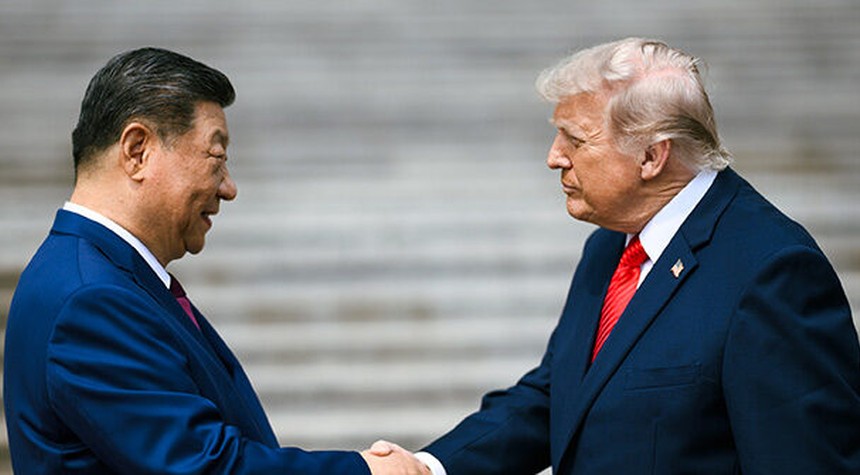
The release represents a tangible result of President Donald Trump’s diplomatic engagement with Chinese President Xi Jinping during their state visit in May. During that meeting, the president raised the cases of two prominent prisoners: Pastor Jin and Hong Kong pro-democracy activist Jimmy Lai. On his return flight from Beijing, President Trump told reporters that Xi indicated he would “strongly consider” the pastor’s case, though he acknowledged Lai’s situation would prove more difficult to resolve.
Pastor Jin founded Beijing’s Zion Church and was among eighteen church leaders arrested in what has been described as China’s largest coordinated action against a single religious congregation in decades. His imprisonment became a focal point for Western governments and human rights organizations, which have consistently accused Beijing of weaponizing national security legislation to suppress religious expression and political dissent.
The Inter-Parliamentary Alliance on China announced the pastor’s release, marking what many hope signals a shift in Beijing’s approach to religious freedom. Jin’s daughter, Grace Jin Drexel, now serves as a national security analyst with the United States Senate Republican Policy Commission and campaigned vigorously for her father’s freedom throughout his detention.
The family issued a statement praising the Trump administration for its leadership in securing the release, expressing their belief that direct intervention from President Xi made the outcome possible. “We hope this is a signal of a positive turn for people of faith in China and relations between our two nations,” the statement read.
The case illustrates the complex dynamics of American-Chinese relations, where economic competition and strategic rivalry exist alongside the possibility of humanitarian cooperation. President Trump’s willingness to raise individual cases during high-level diplomatic meetings demonstrates a traditional American approach to foreign policy that places human rights concerns alongside broader strategic interests.
Jimmy Lai remains imprisoned. The seventy-eight-year-old founder of Hong Kong’s now-defunct pro-democracy newspaper Apple Daily is serving a twenty-year sentence following convictions on charges including conspiring with foreign forces and publishing seditious material. His case continues to draw international attention as a test of Beijing’s commitment to the “one country, two systems” framework that was supposed to preserve Hong Kong’s distinct legal and political character.
The timing of Pastor Jin’s release on Independence Day carries symbolic weight, whether intentional or coincidental. It serves as a reminder that American diplomatic engagement, when conducted with persistence and at the highest levels, can still achieve concrete humanitarian outcomes even with strategic competitors.
The question now becomes whether this represents an isolated gesture or the beginning of a broader reconsideration of religious and political persecution in China. The international community will be watching carefully to see if other imprisoned religious leaders and political activists receive similar consideration from Beijing in the months ahead.
Related: President’s $1.4 Billion Crypto Windfall Creates Uncertainty Over Tax Obligations