
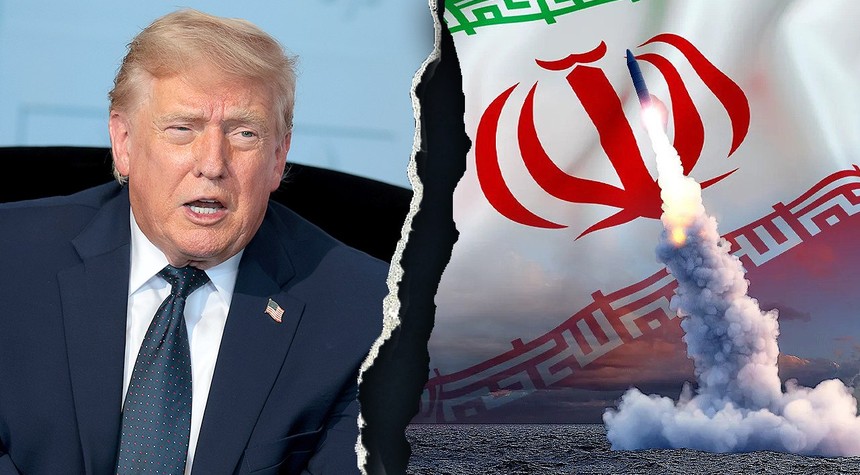
President Donald Trump issued a stark warning to Iran this week, stating that the United States stands prepared to strike the Islamic Republic with overwhelming military force should ongoing nuclear negotiations collapse.
“If they back out again, they’re going to get hit really hard,” Trump stated during a television interview Tuesday evening. “They know that. They understand that. I have no choice. They can’t have a nuclear weapon. It’s very simple.”
The president’s remarks underscore the delicate balance between diplomacy and military preparedness that has characterized American foreign policy in the Middle East for decades. This is precisely the sort of moment that tests presidential resolve and the credibility of American power on the world stage.
Trump revealed that he had postponed what he described as a massive military operation against Iran after Tehran and several Middle Eastern nations requested additional time for diplomatic discussions. The planned strike, according to the president, would have been the largest American military action since World War II.
“We were going to a tremendous attack, the biggest since World War II, and they called me and said very politely, ‘Please, can we talk? Can we talk?’ And I said, ‘Yes, we can talk. Let’s get it done,'” Trump recounted.
The negotiations center on two critical issues: reopening the Strait of Hormuz, a vital waterway for global oil shipments, and curtailing Iran’s nuclear weapons program. Earlier this week, the president suggested that an agreement was “imminent,” though significant obstacles remain.
Iranian officials have publicly denied conducting direct negotiations with Washington, insisting that any discussions occur through Omani mediators. International reporting indicates that Iranian and Omani officials have indeed made substantial progress toward a potential agreement regarding the strait, though negotiations continue.
Trump dismissed Iran’s public denials as political theater, calling them “just such a lie” while acknowledging the disconcerting nature of Tehran’s contradictory statements. “But it doesn’t matter. That’s talk. The only thing that matters is action,” he said. “And they want to make a deal. We’ll see what happens. If they don’t make a deal, it’s going to be too bad.”
The president emphasized that military action remains firmly on the table should diplomacy fail. “The hard hit is yet to come, and hopefully we won’t have to use it,” he said.
When questioned about the timeline for abandoning negotiations after previous talks have repeatedly collapsed, Trump indicated he was not rushing to end diplomatic efforts, suggesting patience remains part of the American strategy despite his forceful warnings.
The situation reflects the complex reality of dealing with Iran, a nation that has long pursued regional dominance while developing nuclear capabilities that threaten American allies and interests. The question facing this administration is whether Tehran will ultimately choose economic survival and regional stability over nuclear ambitions.
For now, the world watches as diplomacy proceeds through careful channels while American military forces stand ready. The outcome will likely shape Middle Eastern politics and American foreign policy for years to come.
Related: Trump Halts Iran Strikes as Former Officials Debate Middle East Withdrawal