
As the United States marks its 250th anniversary, the nation finds itself divided not merely in celebration but in fundamental vision. President Donald Trump has chosen to commemorate this historic milestone with a UFC event at the White House, while a vast network of progressive organizations has mobilized a coordinated opposition campaign spanning the breadth of the country.
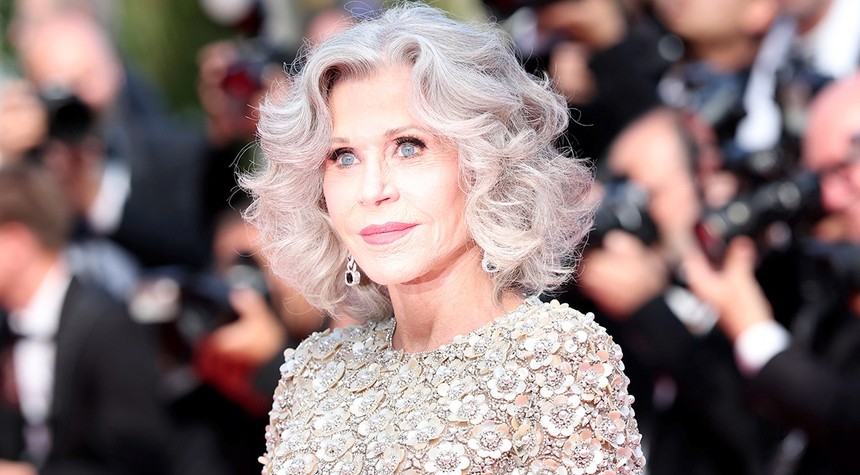
The “No Kings” coalition, comprising approximately four hundred organizations with combined annual revenues estimated at three billion dollars, has organized a nationwide protest operation coinciding with the semiquincentennial celebrations. The coalition’s efforts include a celebrity concert headlined by actress Jane Fonda, hundreds of watch parties across the nation, and local organizing events, including one provocatively titled “RAGE AGAINST THE CAGE!”
Internal planning documents reveal that organizers view these gatherings not as isolated protests but as foundational elements of a sustained political organizing network intended to oppose the Trump administration through the midterm elections and beyond. This represents a significant escalation in progressive resistance efforts, leveraging the symbolic weight of America’s 250th birthday to galvanize opposition forces.
The president, meanwhile, has opted for a decidedly unconventional approach to marking this historic occasion. Rather than traditional state ceremonies or historical commemorations, Trump hosted UFC fighters at the White House, including Ilia Topuria, Alex Pereira, Justin Gaethje, and Ciryl Gane. The choice reflects Trump’s characteristic departure from presidential norms and his affinity for popular entertainment that resonates with his political base.
This divergence in how Americans choose to mark their nation’s semiquincentennial speaks to deeper fractures in the American body politic. Where previous milestone anniversaries saw relatively unified national celebrations, the 250th finds Americans fundamentally at odds over the direction and meaning of their republic.
The scale of the opposition coalition merits attention. Three billion dollars in combined organizational resources represents substantial institutional capacity for sustained political action. These are not spontaneous gatherings but carefully coordinated efforts backed by established infrastructure and funding.
The question facing observers is whether this moment represents merely another chapter in contemporary political polarization or something more consequential. The deliberate timing of these protests, the coordination across hundreds of organizations, and the explicit commitment to sustained opposition through future election cycles suggest a strategic effort to transform anniversary commemoration into political mobilization.
For a nation that has weathered civil war, economic depression, and global conflicts, political division is hardly unprecedented. Yet the inability to find common ground even in celebrating the nation’s founding raises questions about the durability of shared civic identity in an era of intensifying partisanship.
As Americans on both sides mark this anniversary in their chosen ways, the contrast itself becomes the story. The semiquincentennial arrives not as a moment of unity but as a mirror reflecting a nation struggling to agree on what it is celebrating and why that celebration matters.
That is the state of affairs as America enters its third century, and that is the way it is.
Related: Tehran Seals Underground Uranium Stockpile Ahead of Expected Deal