
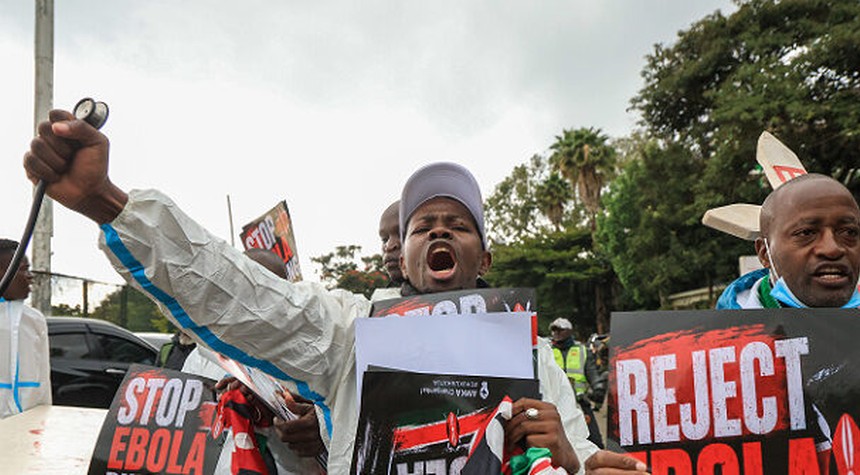
Two individuals lost their lives Monday during demonstrations in Kenya opposing the construction of an American Ebola isolation facility at Laikipia Air Base, a military installation near the town of Nanyuki.
According to reports from the scene, one victim sustained gunshot wounds near the airbase perimeter where protesters had gathered. Friends transported him to a local hospital, where he succumbed to his injuries. The second victim was pronounced dead upon arrival at the medical facility, having been brought in by soldiers.
Family members have identified one of the deceased as Charles Mang’aro Mwangi, twenty-seven years old. His mother disputes any connection between her son and the protests, stating he was merely traveling to visit a friend when the shooting occurred. She maintains that Mwangi was unarmed and posed no threat to security forces, suggesting his death resulted from police action.
The controversy centers on American plans to construct a fifty-bed quarantine facility at the Kenyan military base. United States officials selected this location due to its proximity to the ongoing Ebola outbreak in the Democratic Republic of the Congo. The facility would provide treatment capabilities for American citizens requiring urgent medical care, with officials noting that other regional airports lack adequate infrastructure for receiving medical evacuation flights.
American authorities emphasized Tuesday that no patients are currently scheduled for transfer to the facility. The installation serves as a contingency measure should the need arise. Air Force transport aircraft delivered construction materials and personnel to Laikipia Air Base late last week.
Secretary of State Marco Rubio discussed the matter with Kenyan President William Ruto in recent days, committing thirteen and a half million dollars toward Kenya’s Ebola preparedness initiatives. This funding supplements one hundred twelve million dollars in regional assistance already pledged by Washington.
Kenyan government officials have indicated the facility would serve their own military personnel and civilians if circumstances required, an arrangement that appears acceptable to President Ruto. However, substantial segments of the Kenyan population harbor serious reservations.
Opposition has manifested through both street protests and legal action. The Law Society of Kenya, joined by medical professional unions, petitioned the High Court to halt construction. Their complaint argues that Kenya should not become what they term a “geopolitical isolation ward” for foreign nationals. The plaintiffs cite concerns about procedural transparency and question whether Kenya’s healthcare infrastructure possesses sufficient capacity to manage potential Ebola transmission.
The High Court issued orders Friday preventing the facility’s opening and prohibiting the entry of any Ebola-infected individuals into Kenyan territory. The court further demanded complete public disclosure of all planning documents related to the treatment center.
President Ruto addressed the controversy publicly for the first time Monday, expressing surprise at the strength of public opposition to the project.
The deaths Monday have intensified an already volatile situation, raising questions about both the future of American-Kenyan cooperation on epidemic response and the broader implications of establishing foreign medical facilities on sovereign territory during public health emergencies.
This remains a developing story with significant implications for regional health security and international cooperation in addressing infectious disease outbreaks.
Related: Honduran Authorities Capture Alleged Gang Leader in Connection With Mass Killing