
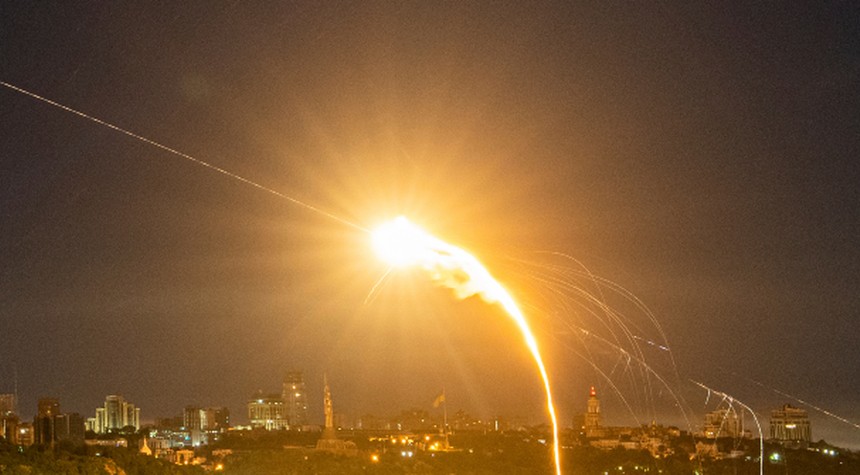
Ukrainian forces have successfully intercepted Iranian Shahed drones across multiple Middle Eastern nations, President Volodymyr Zelensky confirmed Wednesday, marking a significant expansion of Ukraine’s military expertise beyond its own borders.
The deployment of Ukrainian anti-drone specialists to the region represents a strategic pivot for Kyiv, transforming hard-won battlefield experience into diplomatic and economic opportunities. Ukrainian military experts in interceptor drone technology and electronic warfare traveled to several countries targeted during Iran’s Operation Epic Fury, where they demonstrated their capabilities against the same weapons systems Russia has employed against Ukrainian cities and infrastructure.
“Did we destroy Iranian Shaheds? Yes, we did. Did we destroy them in just one country? No, in several. And this, in my opinion, is a success,” Zelensky stated on the Telegram messaging platform.
The Shahed drone has become one of the most consequential weapons systems of recent conflicts. Iran’s low-cost “kamikaze drones” have been produced in vast numbers for Tehran’s own forces and exported to allies, most notably Russia. Moscow found these weapons so effective in Ukraine that it began manufacturing its own domestic variant under license from Iran.
What Ukrainian forces provided was not merely theoretical instruction. Zelensky emphasized that this deployment involved actual combat operations, not training exercises. In countries that granted Ukrainian experts access to their air defense systems, the Ukrainians quickly identified vulnerabilities and recommended improvements that proved effective in real-world engagements.
The Ukrainian president disclosed that his forces successfully engaged not only the standard propeller-driven Shaheds but also more advanced jet-powered variants. Russia developed this faster iteration, known as the Shahed-238, which can fly several times faster than original Iranian models and possesses the capability to track moving targets. Ukraine’s success against these more sophisticated threats carries particular significance.
“We also shot down drones with jet engines. This is a very good signal, I think,” Zelensky noted, adding that mass production of interceptors capable of destroying jet-powered drones appears imminent.
The deployment builds upon earlier Ukrainian diplomatic efforts. In March, Zelensky revealed that Ukrainian officials had been dispatched to five Middle Eastern nations, though Wednesday’s statement marked his first official confirmation of successful intercepts. According to Ukrainian National Security and Defense Council head Rustem Umerov, those five countries are Saudi Arabia, Kuwait, Jordan, Qatar, and the United Arab Emirates.
The strategic calculus behind Ukraine’s Middle Eastern deployment extends beyond immediate military assistance. Zelensky has positioned Ukrainian anti-drone expertise as potentially crucial for protecting the Strait of Hormuz against Iranian attacks, a proposition of considerable interest to both regional powers and Western nations dependent on Persian Gulf energy supplies.
In exchange for this expertise, Ukraine seeks increased financial support and additional surface-to-air missiles to defend against Russian aircraft. The arrangement represents a pragmatic exchange: Ukrainian combat experience for resources needed to sustain its own defense.
Reports indicate that Gulf Arab states have expressed interest in purchasing Ukrainian-designed interceptor drones, remarkably inexpensive systems produced through collaboration between Japanese company Terra Drone and Ukrainian startup Amazing Drone. Such sales would provide Ukraine with revenue streams while establishing long-term defense relationships that could prove valuable well beyond the current conflict.
The deployment demonstrates how Ukraine has transformed the crucible of its own defense into exportable military expertise, potentially reshaping its international relationships and economic prospects even as the war continues.
Related: Prime Minister Starmer Blames Trump and Putin While British Energy Security Deteriorates