
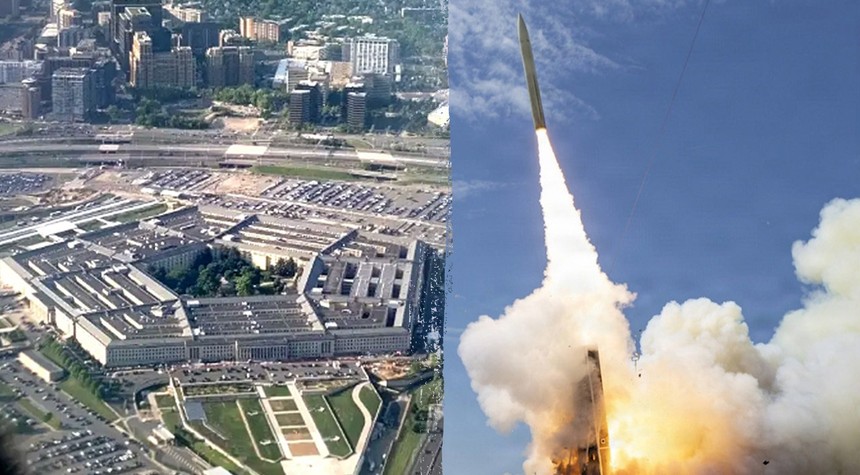
The United States finds itself at a critical juncture in military procurement as it pursues an ambitious expansion of hypersonic weapons capabilities while confronting the stark economic realities of advanced warfare technology.
The Pentagon’s hypersonic missile program represents a significant departure from traditional weapons systems, both in capability and cost. The Army’s Dark Eagle long-range hypersonic weapon carries an estimated price tag exceeding $40 million per missile, according to Government Accountability Office assessments. Navy variants destined for Zumwalt Destroyers approach $70 million per unit when factoring in development and integration expenses.
These figures stand in sharp contrast to conventional armaments that have formed the backbone of American military might for decades. A single Tomahawk cruise missile costs approximately $2.6 million. The Army’s Patriot interceptors run nearly $4 million each. The Precision Strike Missile program produces units at $1.6 million apiece.
The mathematics present military planners with difficult choices. For the cost of one naval hypersonic missile, the Navy could acquire twenty-seven Tomahawk cruise missiles. The Army could field twenty-five Precision Strike Missiles for each Dark Eagle in its inventory.
Mark Cancian, a retired Marine Corps colonel now serving as senior advisor with the Center for Strategic and International Studies Defense and Security Department, framed the challenge directly. The military requires a three-tiered missile architecture, he explained: economical munitions for volume, proven systems like Patriot for intermediate threats, and hypersonic weapons for specialized missions.
The strategic calculus extends beyond simple cost comparison. Hypersonic weapons travel at speeds exceeding Mach 5, reaching velocities up to twenty times faster than conventional missiles. This velocity advantage compresses adversary response time by a factor of six, according to military assessments. The weapons’ maneuverability enables them to evade sophisticated defense networks that might readily defeat traditional ballistic trajectories.
Cameron Tracy, senior research scholar at the University of California, Berkeley, observed a fundamental shift in military thinking. Hypersonic systems now occupy the position of revolutionary technology, while ballistic missiles have assumed the mantle of legacy weaponry.
Strategic analysis suggests these advanced systems may prove more efficient in certain operational scenarios. Research from the Atlantic Council indicates that hypersonic weapons could accomplish mission objectives with seventy-five percent fewer units than conventional alternatives would require.
The production timeline presents additional concerns. The Navy’s hypersonic modernization program for Zumwalt-class destroyers runs two years behind schedule, the GAO reports. Defense planners anticipate these delays will resolve as manufacturing processes mature and production volumes increase.
Xiaodon Liang, senior policy analyst for the Arms Control Association, characterized the weapons as “exquisite” systems intended for specialized applications rather than general deployment. Military strategists appear to recognize these limitations, viewing hypersonics as precision instruments for specific strategic requirements rather than wholesale replacements for existing arsenals.
The United States undertakes this development program while rival powers advance their own hypersonic capabilities. The competitive pressure adds urgency to American efforts even as budget constraints demand careful prioritization.
The resolution likely involves the balanced approach Colonel Cancian articulated: maintaining depth in conventional munitions while selectively incorporating advanced systems where their unique capabilities justify the premium cost. The coming years will reveal whether this measured strategy proves sufficient to maintain American military advantage in an era of rapid technological change.
That is the situation as military planners currently assess it. The American defense establishment faces challenging decisions ahead as it navigates between fiscal responsibility and technological superiority.
Related: Somaliland President Appeals to Trump for Recognition as Independent Nation