
The United States has significantly increased its military presence in the Caribbean, deploying substantial naval and air assets off the coast of Venezuela in what the State Department describes as counter-narcotics operations. The deployment has resulted in airstrikes against small vessels that have claimed more than eighty lives, prompting questions about the true strategic objectives behind this campaign.
Venezuelan President Nicolás Maduro has characterized the American buildup as a thinly veiled attempt to seize control of his country’s oil reserves, which represent nearly twenty percent of all known global petroleum deposits. The State Department firmly rejects this assertion, maintaining that operations target drug trafficking routes into the United States.
President Trump has made no secret of his desire for regime change in Caracas, where Maduro maintains power with support from China, Russia, and Iran. Venezuela’s economic collapse has triggered the largest migration crisis in Latin American history, with millions fleeing the country’s deteriorating conditions.
Yet the administration’s approach raises legitimate questions. Trump has demonstrated willingness to negotiate with authoritarian leaders elsewhere in the world. Furthermore, experts note that interdicting small boats in the Caribbean will have minimal impact on drug flows into America, as the overwhelming majority of narcotics enter through Mexico. These facts have led critics to conclude that additional motives drive American policy.
Colombian President Gustavo Petro, himself engaged in increasingly contentious exchanges with the Trump administration, has described the three-month campaign as fundamentally about oil negotiations rather than democratization or counter-narcotics efforts.
However, energy analysts familiar with Venezuela’s petroleum sector suggest the situation proves more complex than simple resource acquisition. Francisco J. Monaldi, who directs the Latin America Energy Program at Rice University’s Baker Institute for Public Policy, notes that oil may factor into American calculations but likely does not represent the primary motivation.
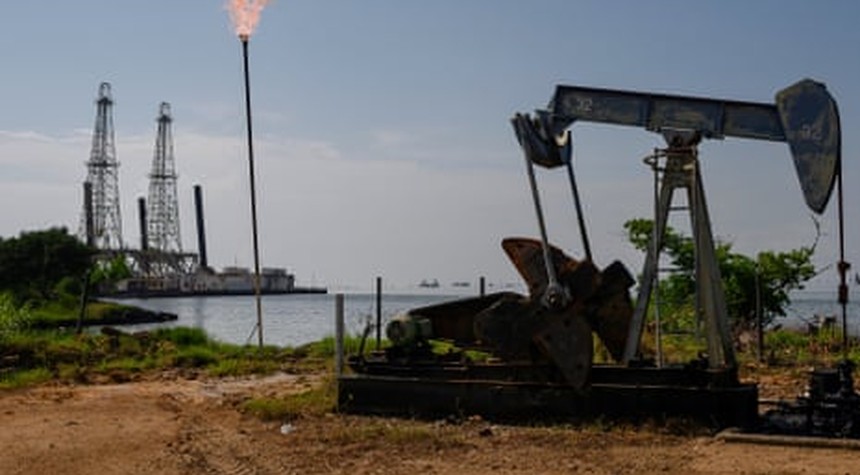
Venezuela’s current position in global energy markets hardly justifies a major military intervention. Despite possessing nearly one-fifth of known worldwide reserves, the country accounts for less than one percent of global production. Most Venezuelan crude consists of heavy sour petroleum, which requires more sophisticated and expensive extraction methods than conventional oil.
Decades of corruption, mismanagement, and insufficient investment have crippled Venezuela’s oil industry. Monaldi estimates current output at just under one million barrels daily, though he believes production could eventually reach four to five million barrels with proper development. Such expansion would require approximately one hundred billion dollars in investment and at least a decade to implement.
The industry’s decline accelerated after Hugo Chávez, Maduro’s predecessor, consolidated government control of the state oil company PDVSA following worker strikes in the early 2000s. Chávez dismissed thousands of experienced employees and mandated that PDVSA maintain at least fifty-one percent ownership and operational control of all exploration projects. These policies drove away major international oil companies including ConocoPhillips and ExxonMobil, which had operated in Venezuela for generations.
Production collapsed further after the Trump administration imposed sanctions during its first term, banning Venezuelan oil imports. The Biden administration subsequently eased some restrictions, though the industry’s recovery remains uncertain.
The current military buildup thus presents a puzzle. If oil represents the primary objective, the timeline and investment required make Venezuela an unattractive target compared to other opportunities. Yet if counter-narcotics truly drives policy, the chosen methods appear ineffective given actual trafficking patterns.
What remains clear is that American policy toward Venezuela carries significant implications for regional stability and international relations with Moscow, Beijing, and Tehran.
Related: Western Nations Unite in Concern Over China’s Global Ambitions