
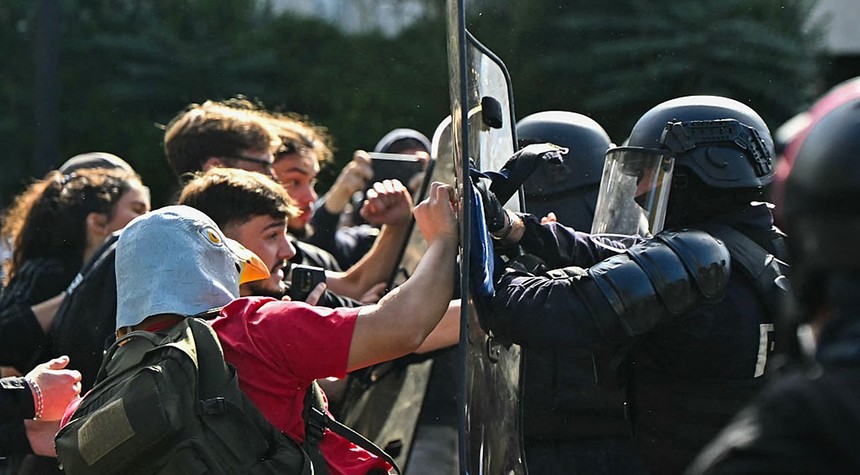
The scenes unfolding across France this week present a sobering reality that demands our attention. What began as student demonstrations against overcrowded classrooms and deteriorating school conditions has escalated into nationwide violence, prompting difficult questions about immigration policy, social cohesion, and the sustainability of Western welfare systems.
More than 5,000 protesters have been arrested across France as riots spread from the poorer suburbs of Paris to cities including Marseille, Strasbourg, Tours, Nantes, Toulouse, and Lille. Authorities have responded with tear gas and rubber bullets as demonstrators have committed arson, vandalism, and assaults. More than 400 schools remained closed as of this reporting.
The protests originated late last month with legitimate grievances. French students took to the streets citing teacher shortages, excessively long school days, and facilities in disrepair. Their message was clear: the government has failed to invest adequately in education. That message gained additional urgency Thursday when France unveiled its 2027 budget, showing education spending would rise by merely 1.7 percent, excluding teacher pensions. This increase falls below the rate of inflation, effectively representing a cut in real terms.
What transformed peaceful protest into violent upheaval reflects deeper fractures within French society. The riots have reignited debate over Europe’s immigration policies and their long-term consequences. France, like much of Western Europe, pursued open-border policies for years under the banner of diversity and humanitarian obligation. The current unrest suggests those policies may have exceeded the capacity of French institutions to absorb and integrate newcomers while maintaining services for existing citizens.
The American implications cannot be ignored. For four years, similar immigration policies were pursued here at home, straining resources in cities from New York to Chicago to Los Angeles. The current administration has begun reversing course, but the French example demonstrates what happens when governments prioritize symbolic gestures over practical governance.
The fundamental question is one of sustainability. Can any nation maintain robust public services while simultaneously opening its borders to unlimited immigration? The French students protesting overcrowded classrooms and teacher shortages are receiving their answer. When government resources are stretched thin, citizens who have paid into the system through generations of taxation naturally question why their needs go unmet.
This is not to justify violence. The arson and vandalism witnessed in French cities serves no productive purpose and undermines legitimate grievances. Yet the anger itself is understandable, even predictable. Citizens of any nation will eventually resist policies that appear to prioritize newcomers over their own families’ welfare.
The French government now faces a crisis of its own making. Education spending that fails to keep pace with inflation, combined with population pressures from immigration, has created a powder keg. The explosion was merely a matter of time.
For Americans watching these events unfold, the lesson should be clear. Immigration policy must balance humanitarian concerns with practical reality. Public institutions have finite capacity. Social cohesion requires time, investment, and shared commitment to common values. Ignore these truths, and you inherit the whirlwind.
France is learning this lesson the hard way. Whether American policymakers heed the warning remains to be seen. But the images of burning garbage and riot police in the streets of Paris should give pause to anyone advocating unlimited immigration without regard for consequences.
That is the situation as it stands this evening in France, and the implications for our own nation merit serious consideration.
Related: Security Researcher Exposes Dangerous Vulnerabilities in Chinese AI System