
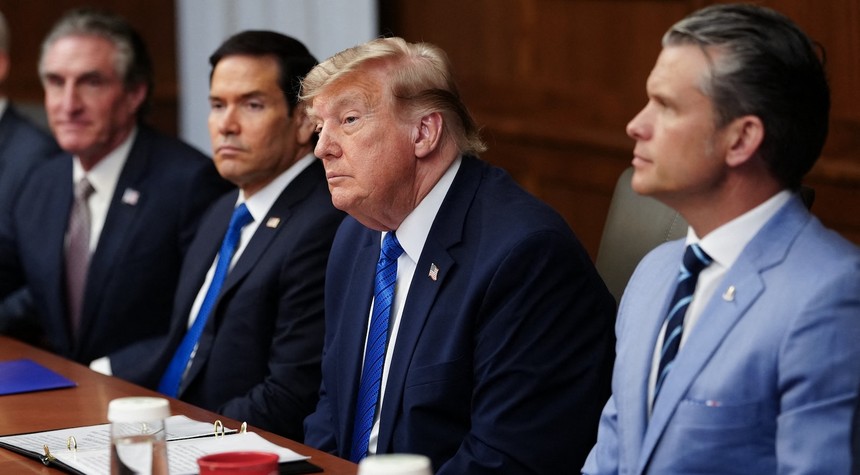
President Donald Trump withdrew his offer to provide Ukraine with a license to manufacture Patriot air defense systems, citing concerns about technology transfer and national security during a Cabinet meeting at Camp David on Friday.
“We have not agreed to that,” Trump stated firmly when questioned about the proposal. “We have to be very careful about letting somebody build them. You have to be very judicious, but you have to be very careful. We’re talking about it, but it’s a hard thing to give away that kind of technology.”
The reversal directly contradicts statements made by Ukrainian President Volodymyr Zelenskyy following his Tuesday meeting at the White House. Zelenskyy had indicated that Trump approved the licensing agreement, and subsequently met with executives from Lockheed Martin, the defense contractor that produces the Patriot missile systems.
This marks a significant departure from Trump’s public commitment made at the NATO summit in Turkey in early July. At that gathering, the president addressed Zelenskyy directly, saying, “We’re going to give a license to you to make Patriots. That’s pretty cool, right? This way he can’t complain that we’re not giving him enough. I said, ‘Make them yourself.'”
The Patriot missile system has become a critical component of Ukraine’s defense infrastructure. Zelenskyy has repeatedly warned of the rapid depletion of these weapons, which military analysts widely regard as the most effective countermeasure against Russian missile and drone attacks. The Ukrainian president has made replenishment of these systems a top priority in his discussions with American officials.
As the Cabinet meeting commenced Friday, Zelenskyy posted on social media that he had received what he characterized as a positive phone call from Vice President JD Vance, during which he again emphasized the urgent need for Patriot systems.
Trump acknowledged Ukraine’s requests during his Friday remarks. “He’d like to have some Patriots,” the president said of Zelenskyy. “He’d like to have some Tomahawks, which are, you know, lethal. One offensive, one defensive.”
The president characterized the technology transfer as a significant step that requires careful consideration. He raised concerns about the possibility that nations receiving such sensitive military technology could potentially use it against American interests in the future.
“I don’t think this would ever happen, but those people that you give that technology, they can someday turn on you,” Trump said. “You know, that is possible. So we have to be very careful.”
Trump indicated he discussed the weapons systems with Zelenskyy during the Ukrainian president’s White House visit. However, he emphasized that their conversation extended beyond military hardware. “I also spoke to him about let’s get this war over with,” Trump said.
The president made clear his position that both Ukraine and Russia must make concessions to end the conflict, which entered its third year following Russia’s invasion in February 2022. This stance reflects the administration’s broader approach to the war, which prioritizes negotiated settlement over continued military escalation.
The reversal on Patriot technology transfer represents another instance of shifting policy positions that have characterized this administration’s approach to the Ukrainian conflict, leaving questions about the consistency of American commitments to its Eastern European ally.
Related: Five Iranian Military Personnel Return Home After Deaths in Iraq Operations