
President Trump publicly criticized Ukrainian President Volodymyr Zelenskyy on Sunday evening, expressing disappointment that the Ukrainian leader had not yet reviewed a White House-authored proposal to end the nearly four-year war with Russia.
Speaking to reporters before the Kennedy Center Honors ceremony, the President stated his frustration with Zelenskyy’s response to the peace plan while asserting that Russia had endorsed the proposal.
“I’m a little bit disappointed that President Zelenskyy hasn’t yet read the proposal, that was as of a few hours ago,” Trump said. “His people love it. But he hasn’t. Russia’s fine with it. Russia is, I believe, fine with it, but I’m not sure that Zelenskyy’s fine with it.”
The Ukrainian president has not responded publicly to these remarks, and his office has not issued a statement on the matter.
The President’s assessment stands in notable contrast to statements from Kremlin officials following last week’s talks in Moscow. A top Russian official told journalists that the meetings between senior White House envoys and Vladimir Putin’s team had brought the parties “no closer to resolving the crisis in Ukraine.”
Presidential son-in-law Jared Kushner and Special Envoy Steve Witkoff subsequently held meetings in Florida with Ukrainian representatives over the weekend. Their joint statement indicated that “both parties agreed that real progress toward any agreement depends on Russia’s readiness to show serious commitment to long-term peace, including steps toward de-escalation and cessation of killings.”
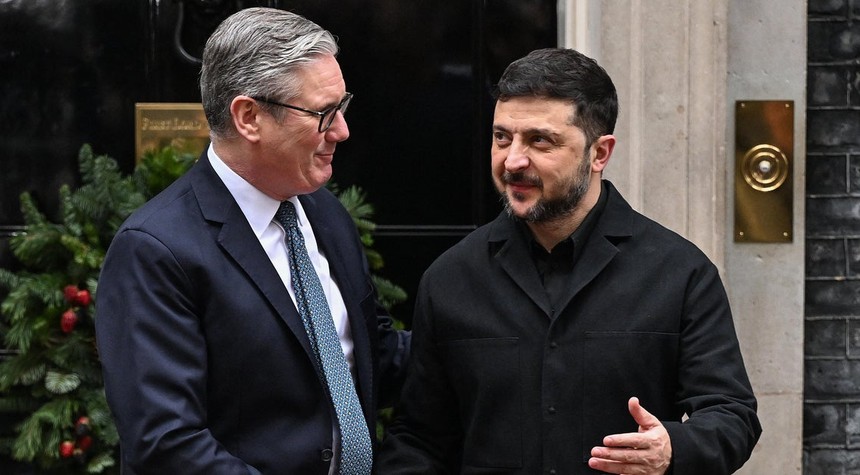
The timing of Trump’s comments carries particular significance. Zelenskyy was scheduled to meet Monday in London with the leaders of Britain, France, and Germany in a display of European unity. The Ukrainian president finds himself walking a diplomatic tightrope, attempting to maintain crucial American intelligence and military support while resisting White House pressure to accept ceasefire terms that he and his European allies view as favorable to Russia.
The central issue remains territorial concessions. Zelenskyy has previously identified “the main problem” with the proposal as its legal recognition of territory seized by Russian forces during the invasion. European leaders have warned that such recognition would establish a dangerous precedent in international relations.
Beyond the territorial dispute, negotiations face additional complications regarding Ukraine’s future security guarantees. Ukrainian and European officials harbor legitimate concerns that without robust security assurances, Russia could launch another invasion after any ceasefire takes effect.
The fundamental disagreement appears to center on what constitutes an acceptable outcome. Ukraine and its European partners seek to prevent any agreement that Moscow could credibly claim as a victory. This objective appears increasingly at odds with the White House approach to ending the conflict.
As Zelenskyy meets with European leaders, he will undoubtedly seek reassurance of continued support as these negotiations proceed. The details of the American proposal remain ambiguous, and the diplomatic path forward grows more complex as differences emerge between Washington’s priorities and those of its traditional European allies.
The situation underscores the delicate balance required in ending a major European conflict while maintaining the principles of territorial sovereignty and international law that have governed the post-World War II order.
Related: Final Afghanistan Report Confirms Taliban Now Controls Billions in American Military Equipment