
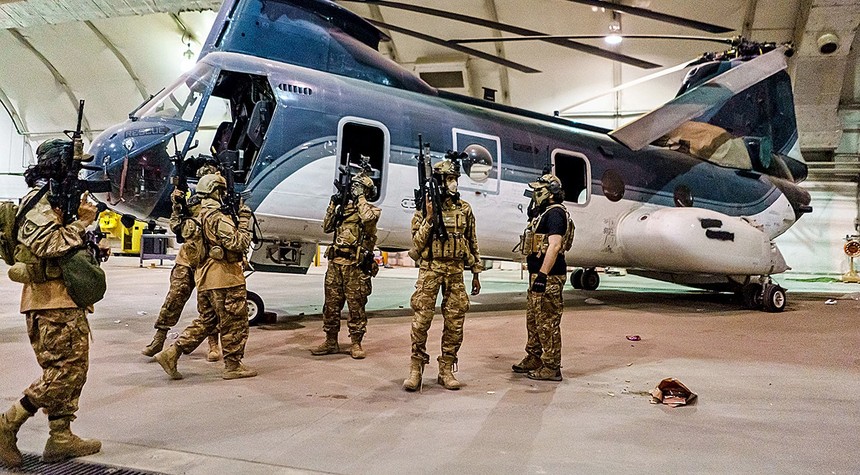
A sobering final assessment has emerged from the government office charged with overseeing two decades of American reconstruction efforts in Afghanistan. The conclusion is as stark as it is troubling: billions of dollars in American military equipment, weapons, and facilities abandoned during the 2021 withdrawal now form the backbone of Taliban security operations.
The Special Inspector General for Afghanistan Reconstruction issued its 137-page final report this week, documenting what amounts to one of the most consequential equipment transfers in modern military history. The transfer, however, was neither planned nor authorized. It was simply left behind.
Between 2002 and 2021, Congress appropriated approximately $144.7 billion for Afghanistan reconstruction efforts. The mission carried ambitious goals: to establish stability and foster democratic governance in a nation that had known precious little of either. According to this final accounting, the United States achieved neither objective.
The report’s language is measured but unmistakable in its assessment. The equipment and facilities that American taxpayers funded to build and train Afghan National Defense and Security Forces now serves a very different purpose. The Taliban, having swept back into power as American forces departed, inherited a ready-made security infrastructure.
The scope of what was left behind remains difficult to fully quantify. The Special Inspector General notes that following the Taliban takeover, inspectors were unable to conduct physical assessments of the equipment provided to Afghan forces or the facilities constructed for their use. This limitation itself speaks volumes about the complete reversal of American influence in the region.
The timing of this final report carries particular weight. As the nation grapples with ongoing security concerns and debates over military readiness, the Afghanistan assessment serves as a case study in the consequences of strategic miscalculation. The equipment now in Taliban hands was intended to create a self-sufficient Afghan military capable of maintaining order after American departure. Instead, it equipped the very forces that American troops had spent twenty years fighting.
This is not merely an accounting exercise. The weapons, vehicles, communications equipment, and military installations now controlled by the Taliban represent both a security concern and a financial loss of staggering proportions. More significantly, they represent a fundamental failure in strategic planning and execution.
The report arrives as a final word from an office that will now close, having completed its mandate. For nearly two decades, the Special Inspector General for Afghanistan Reconstruction provided oversight and accountability for one of the largest nation-building efforts in American history. Its final report reads as an epitaph for that effort.
The broader implications extend beyond Afghanistan’s borders. The chaotic withdrawal and its aftermath have affected American credibility with allies and emboldened adversaries. The sight of Taliban fighters equipped with American weapons and operating from American-built facilities has not gone unnoticed in capitals around the world.
As this chapter of American foreign policy officially closes with this final report, the lessons remain uncomfortably fresh. The cost of the Afghanistan endeavor cannot be measured in dollars alone, though $144.7 billion is itself a staggering figure. The true cost includes the strategic position surrendered and the message sent about American resolve and planning.
That is the way it is, according to the government’s own final accounting.
Related: Texas Authorities Release 435 Emergency Calls from July 4 Flash Floods That Killed Over 130