
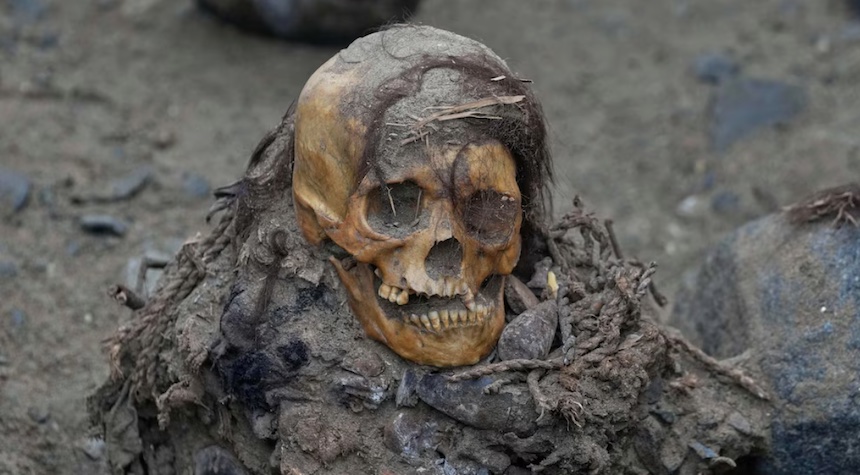
Reports from Peru’s capital indicate that utility workers, while expanding the network of natural gas pipelines, have unearthed a pre-Inca mummy estimated to be approximately 1,000 years old. The intriguing find was located barely half a meter (20 inches) below the surface.
The mummy lay undisturbed despite urban expansion in a district of Lima, where once agricultural fields had transformed into bustling neighborhoods over recent decades. Jose Aliaga, an archaeologist with utility Cálidda, disclosed that the discovered mummy, found in a seated position and shrouded by a cloth, still bears dark brown hair.
“We found remains and evidence that there could be a pre-Hispanic burial,” Aliaga stated, attributing the discovery to the workers’ efforts last week.
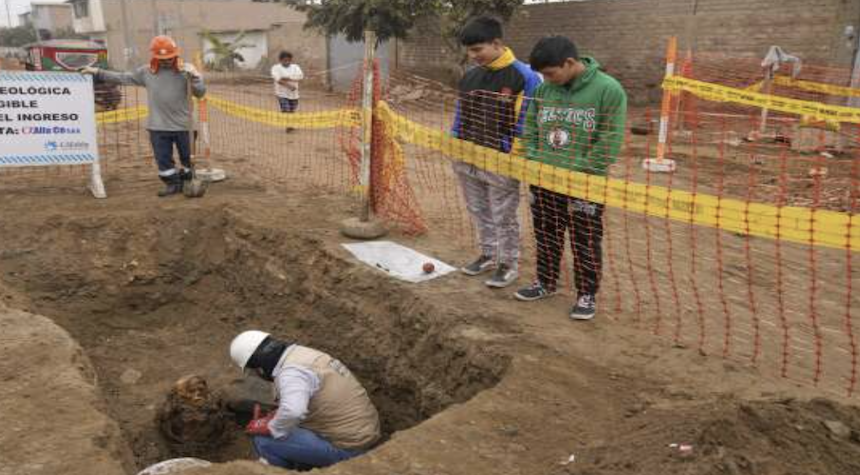
Lima is nestled in a valley nourished by three rivers from the Andes, and was home to human civilizations thousands of years before the Spanish set foot in 1535. Now a sprawling metropolis of 10 million residents, the city hosts more than 400 archaeological sites, many of which are entwined with the current urban fabric.
Pieter Van Dalen, dean of the College of Archaeologists of Peru, said, “It is very common to find archaeological remains on the Peruvian coast, including Lima, mainly funerary elements: tombs, burials, and, among these, mummified individuals.” Van Dalen, who is not involved in the discovery, explained that mummies on the Peruvian coast are usually found naturally mummified, mostly in desert areas, with the skin parched by the summer heat.
Jesús Bahamonde, director of the archaeological monitoring plan of metropolitan Lima at Cálidda, posits that the mummy found last week likely belonged to a society of fishermen of the Chancay culture, which flourished between 1,000 and 1,470 AD.