
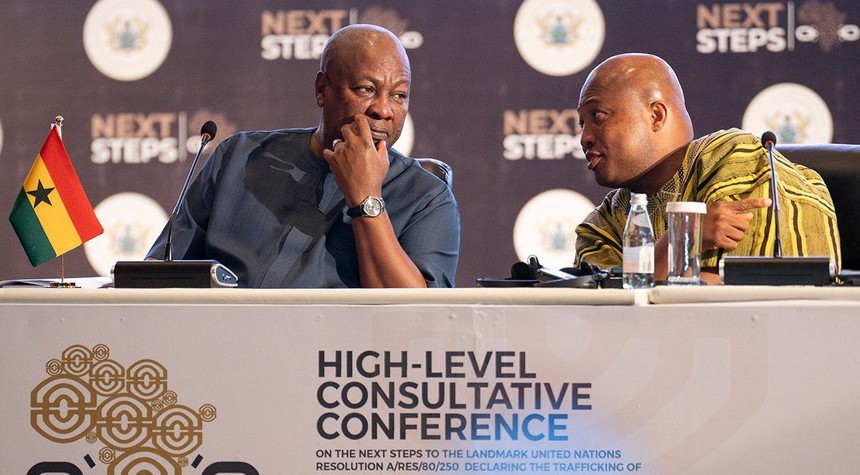
African and Caribbean leaders concluded a three-day conference in Ghana on Friday by adopting an extensive reparations framework addressing the legacy of the transatlantic slave trade. The 19-point plan represents the most coordinated effort to date by nations seeking redress from countries that participated in or benefited from centuries of forced African labor.
The framework, jointly adopted by the African Union and the Caribbean Community Commission on Reparatory Justice, calls for financial compensation, comprehensive debt relief, establishment of a Global Reparations Fund, and the return of cultural artifacts and ancestral remains taken during the colonial period. Additionally, the proposal seeks structural reforms to international financial institutions, which supporters argue perpetuate economic disadvantages for developing nations.
The plan is scheduled for presentation at the upcoming United Nations General Assembly, marking a significant escalation in the reparations movement’s international diplomatic efforts.
Ghanaian President John Dramani Mahama addressed delegates at a wreath-laying ceremony at Christiansborg Castle in Accra, striking a measured tone regarding historical accountability. “None of us gathered in this hall today can be held personally responsible for the atrocities of the transatlantic slave trade,” Mahama stated. “History does not ask us to inherit guilt, but it asks us to inherit responsibility.”
The framework notably avoids naming specific countries from which reparations should be demanded or identifying which nations should issue formal apologies. This strategic ambiguity may reflect diplomatic calculations, though Western European nations and the United States remain the obvious targets given their historical involvement in the slave trade.
The transatlantic slave trade, which operated from the 16th through the 19th centuries, forcibly transported an estimated 12 million Africans to the Americas. The economic benefits derived from enslaved labor contributed substantially to the development of Western economies, a historical reality that forms the foundation of contemporary reparations arguments.
The timing of this coordinated push carries significance. As Western nations grapple with domestic debates over racial justice and historical accountability, African and Caribbean nations appear determined to elevate these discussions to the international stage. The proposal’s emphasis on institutional reform suggests that participating nations view reparations as extending beyond symbolic gestures or one-time payments.
Questions remain regarding implementation. The proposal provides no mechanism for enforcement, no timeline for compliance, and no methodology for calculating appropriate compensation levels. International law offers no clear precedent for compelling sovereign nations to pay reparations for historical injustices committed by previous governments.
The practical challenges are formidable. Western nations face their own fiscal pressures, and domestic political resistance to transferring substantial funds abroad for historical grievances would likely prove significant. Furthermore, determining which modern nations bear responsibility for actions taken by colonial powers that no longer exist presents complex legal and diplomatic challenges.
Nevertheless, the unified front presented by African and Caribbean nations at this conference demonstrates growing sophistication in international advocacy. Whether this framework gains traction at the United Nations or prompts serious negotiations remains to be seen, but the coordinated nature of this effort suggests the reparations debate has entered a new phase on the global stage.
Related: Trump Offers Conditional Support for Netanyahu Ahead of Israeli Elections