
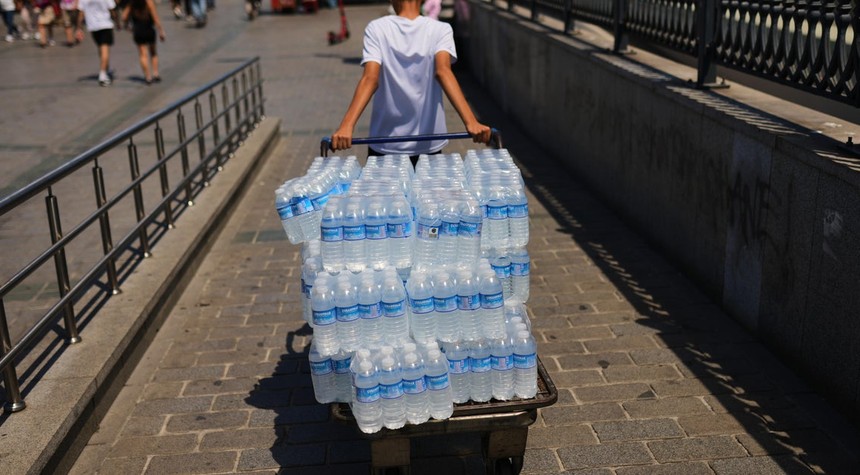
France has placed approximately one-third of its territory under maximum heat alert as temperatures are forecast to reach 104 degrees Fahrenheit in some regions, with authorities warning that Monday’s conditions may prove even more severe.
The French government has mobilized emergency services and military forces to respond to wildfire threats while implementing extraordinary restrictions on public life. Officials have banned alcohol consumption in the most affected zones and canceled outdoor sporting events as the heat wave intensifies across Western Europe.
The timing presents particular challenges. France’s annual Music Day celebration, a nationwide summer solstice tradition featuring thousands of concerts from village squares to Parisian nightclubs, falls directly within the crisis period. The government has permitted these events to proceed under strict conditions, ordering organizers to severely limit alcohol availability. The stated purpose is clear: to preserve emergency response capacity and allow medical personnel to focus on the most vulnerable populations.
Across the continent, authorities have implemented similar protective measures. The Eiffel Tower and other Parisian landmarks have installed misting stations. In Rome, tourists have sought refuge in public fountains. Spain’s Basque Country has canceled cultural and sporting events entirely.
The response reflects hard lessons learned from recent history. More than 200,000 Europeans have died from heat-related causes over the past four years, according to the World Health Organization’s European office. The agency has stated that most of these fatalities were preventable, a sobering assessment that underscores the seriousness with which officials are approaching the current situation.
The lack of widespread air-conditioning in the region transforms what Americans might consider merely uncomfortable heat into a genuine public health emergency. Heat exhaustion and heat stroke pose life-threatening risks, particularly to elderly citizens and those without shelter.
French authorities have directed special attention toward homeless populations and elderly individuals, whether isolated in their homes or residing in care facilities. This focus stems from the catastrophic 2003 heat wave, during which approximately 15,000 elderly French citizens perished.
The broader context cannot be ignored. The United Nations climate agency projects that the next five years will shatter additional heat records. Recent scientific analysis of last month’s unusually early European heat wave concluded that human-caused climate change was responsible for approximately 1,500 deaths.
These projections indicate that above-average temperatures will persist throughout the summer months, suggesting that the current emergency measures may represent not an exceptional response but rather a preview of recurring seasonal challenges.
The situation demonstrates the tangible consequences of climate patterns that scientists have long predicted. European governments now find themselves managing a crisis that demands immediate action while confronting the likelihood that such extreme conditions will become increasingly common.
For now, French emergency services remain on high alert, military assets stand ready to combat wildfires, and officials continue monitoring conditions hour by hour. The weekend’s Music Day celebrations will proceed, albeit in modified form, as authorities balance the preservation of cultural traditions against the imperative of protecting public health.
The coming days will test both the preparedness of European emergency response systems and the resilience of populations unaccustomed to such sustained extreme heat.
Related: Cuban Chef Earns First Michelin Star for Cuban Cuisine After Fleeing Communist Regime