
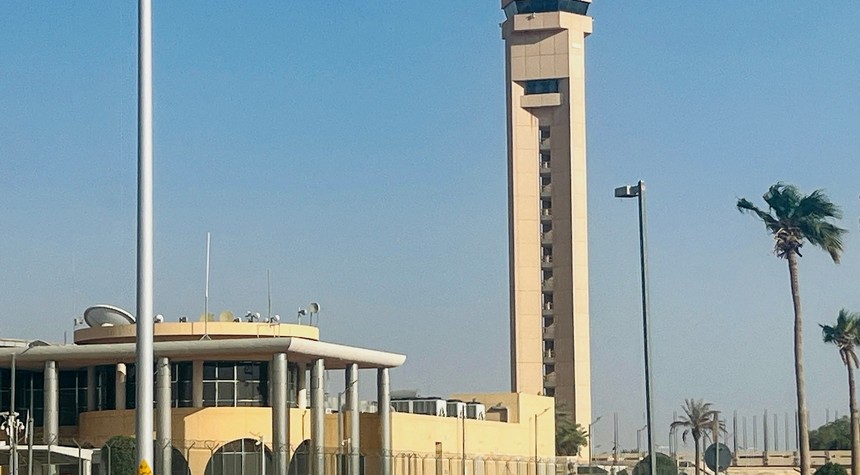
And that is the situation tonight in the volatile Persian Gulf region, where an American citizen has been killed in a missile attack on Saudi Arabia’s capital city, and where the prospect of wider conflict grows with each passing day.
Secretary of State Marco Rubio confirmed Saturday that an American lost his life when Iranian-backed Houthi forces struck King Khalid International Airport in Riyadh. The attack represents the latest escalation in a conflict that has drawn the United States deeper into the ancient rivalries of the Middle East.
“These reprehensible attacks demonstrate a blatant disregard for innocent civilian life,” Rubio stated in his official response. “They must stop now.”
The facts of the matter are these: President Trump authorized major combat operations against Iran on February 28, launching massive joint strikes with Israeli forces against military, government, and infrastructure targets throughout Iran. These operations came despite a memorandum of understanding signed by both nations last June, an agreement that was meant to end hostilities but ultimately failed to hold.
The Strait of Hormuz, that critical waterway through which much of the world’s oil supply passes, has become the primary flashpoint. On Saturday, United States Central Command reported disabling a commercial cargo vessel in the Gulf of Oman after its crew attempted to run the naval blockade against Iran. A precision munition struck the stern of the Panama-flagged vessel, disabling its propulsion system without casualties among the crew.
In Yemen, the proxy war between Saudi-backed government forces and the Iranian-backed Houthis has intensified considerably in recent weeks. The Houthi militia has expanded its operations beyond Yemen’s borders, launching strikes into Saudi Arabia itself. Saturday’s attack on Riyadh was not the first. Earlier in the week, Houthi strikes on the same airport killed three Saudi nationals, including a pilot.
Saudi military spokesman Turki Al-Maliki placed responsibility for Saturday’s attack squarely on the Houthi forces, as indeed Saudi officials have done for numerous attacks in recent months.
President Trump, speaking with reporters Saturday evening, characterized the airport attack as “terrible” and pledged to speak with Crown Prince Mohammed bin Salman. When asked whether Saudi forces could adequately defend themselves, the President expressed confidence in Saudi military capabilities while emphasizing the gravity of the incident. “What happened in Saudi Arabia is not acceptable,” he stated.
The death of an American citizen on Saudi soil adds a deeply personal dimension to what has been primarily a regional conflict. It raises questions about the safety of American civilians throughout the Gulf region and may influence the administration’s approach to the ongoing crisis.
The situation remains fluid. Naval blockades continue in the Gulf waters. Combat operations proceed in Yemen. And the strategic calculations of Washington, Riyadh, and Tehran continue to evolve as each day brings new developments.
That is the way it is in the Persian Gulf tonight, where an American family mourns, where ancient conflicts persist, and where the decisions made in the coming days may shape the region for years to come.
Related: Border Wall Construction Faces Landowner Resistance in Texas Big Bend Region