
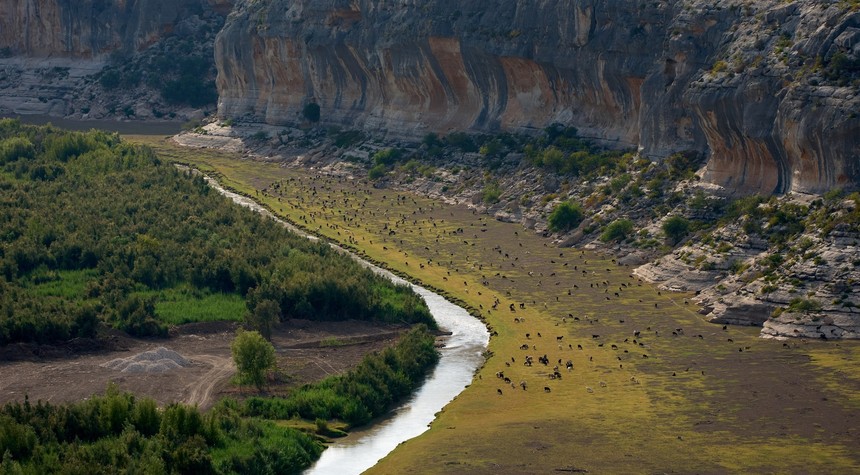
The Trump administration’s ambitious $46 billion border wall project, stretching from the Pacific Ocean to the Gulf of Mexico, has encountered significant resistance in Texas’ Big Bend region, where property owners are refusing to surrender their land for what they characterize as an unnecessary expenditure of federal funds.
This confrontation represents a substantial test of the administration’s commitment to its border security objectives. In a region historically marked by minimal illegal border crossings and formidable natural barriers, the federal government has allocated billions of dollars and suspended various environmental protections to advance construction. Yet the project now faces both judicial and civil opposition that has disrupted conventional political alignments on border security matters.
The federal government possesses broad legal authority to acquire private property for border infrastructure. However, a federal judge has issued a temporary halt to construction throughout the region, providing considerable momentum to landowners who have employed various tactics to impede the project. These property owners have denied government surveyors access to their land, voiced objections at county commission meetings, and prepared legal challenges to the federal government’s eminent domain claims.
David Keller, a property owner who has filed suit against the Big Bend construction plans, stated that landowner resistance has substantially delayed the project. He indicated that the administration had underestimated the level of opposition it would encounter in the region.
The border wall has remained a central policy commitment for President Trump since his initial campaign. Following congressional approval last year of $46 billion for border security as part of a comprehensive immigration enforcement package, the administration has moved forward with construction despite changing circumstances at the border.
While illegal crossings have declined substantially during the Trump administration, officials maintain that physical barriers, vehicle impediments, surveillance systems, and patrol roads remain necessary to sustain these reduced crossing numbers. Customs and Border Protection reports an average construction rate of approximately twelve miles of barrier weekly, with more than two hundred miles of new walls completed during the current administration.
The Big Bend project, which commenced in September, involves a $7.5 billion investment to fortify more than five hundred miles of border territory. The scale of enforcement activity in the region raises questions about the project’s necessity. In August, Border Patrol apprehended 8,870 individuals along the entire southern border. Within Big Bend, which constitutes roughly one quarter of the entire United States-Mexico border, arrests totaled 161.
CBP Commissioner Rodney Scott, responding to the landowner lawsuit, emphasized that the American people have witnessed the consequences of inadequate border security. He stated that no region, including Big Bend, should be vulnerable to exploitation.
The situation in Texas differs markedly from other border areas due to land ownership patterns. Much of the Texas border consists of privately owned or state-controlled property, requiring the federal government to obtain authorization through negotiation or legal proceedings before construction can proceed.
This conflict between federal authority and property rights presents the administration with a complex challenge as it seeks to complete its signature border security infrastructure project.
Related: America’s Food Banks Struggle as Federal Support Declines and Demand Surges