
Nine people were killed and more than sixty wounded as Ukrainian drone strikes reached deep into Russian territory overnight, marking another escalation in Kyiv’s sustained campaign to bring the consequences of war to the Russian homeland.
The attacks, which Russian officials confirmed Saturday, targeted commercial and energy infrastructure across multiple regions, some more than two hundred miles from the Ukrainian border. The strikes represent a continuation of Ukraine’s strategic effort to disrupt Russian logistics and military supply chains while demonstrating that Moscow’s decision to invade its neighbor carries costs that extend far beyond the battlefield.
Two warehouses belonging to Wildberries, Russia’s largest online retailer, sustained direct hits from Ukrainian drones. The first strike occurred in Kotovsk, a town in the Tambov region approximately two hundred twenty miles from Ukraine. The second targeted a facility in Elektrostal, roughly thirty miles east of Moscow itself. Both warehouses erupted in flames, though Wildberries founder Tatyana Kim reported later Saturday that firefighters had extinguished the blaze in Kotovsk.
The human toll proved heaviest at the Kotovsk facility, where seven night shift workers perished and twenty-five others suffered injuries, according to Tambov regional governor Yevgeny Pervyshov. In the Moscow region, thirty-seven people were wounded, with one later succumbing to injuries at a hospital, Moscow region governor Andrei Vorobyov confirmed.
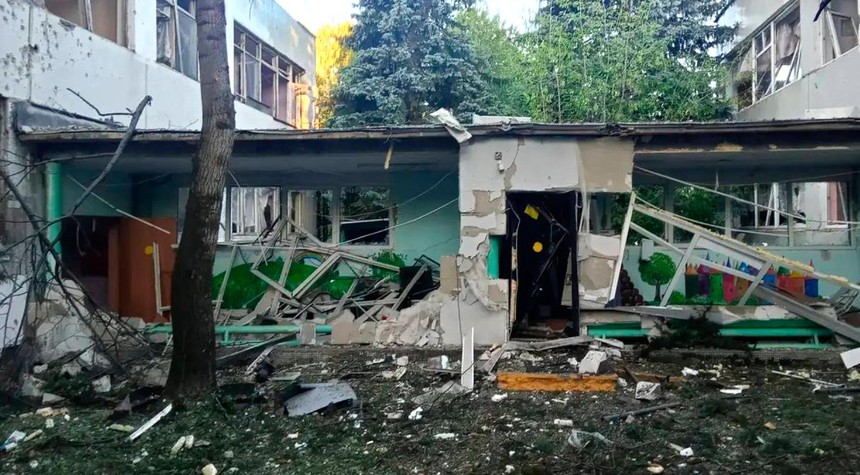
Ukrainian forces also struck an oil depot in Noginsk, just north of Elektrostal, igniting fires that necessitated the evacuation of a nearby maternity hospital and residential building. Additional strikes damaged a kindergarten in Elektrostal and a residential building in Vladimir, approximately one hundred ten miles east of Moscow, though the Vladimir strike produced no casualties.
Ukrainian President Volodymyr Zelenskyy acknowledged the operations in a Telegram post Saturday, describing the targets as “significant logistical facilities” used to supply sanctioned components for drone production and navigation equipment. He confirmed strikes against the Moscow and Tambov region facilities, as well as an oil installation, and noted that Ukrainian special operations forces conducted additional strikes in the Sea of Azov and occupied territories.
The Russian Defense Ministry claimed its air defenses intercepted three hundred seventy-nine Ukrainian drones overnight across nineteen Russian regions, as well as illegally annexed Crimea and waters of the Sea of Azov and Black Sea.
This sustained aerial campaign represents a calculated Ukrainian strategy now well into the war’s fifth year. By targeting infrastructure and logistics networks deep within Russian territory, Ukrainian forces aim to degrade Moscow’s capacity to sustain its invasion while forcing Russian civilians to confront realities that Kremlin propaganda has sought to minimize.
The strikes demonstrate Ukraine’s growing capability to project force far beyond its borders, utilizing drone technology to compensate for limitations in conventional air power. Whether these operations will meaningfully alter Russian public sentiment regarding the war remains uncertain, but they undeniably complicate Moscow’s narrative of a controlled military operation insulated from domestic consequences.
As this conflict continues without resolution in sight, both sides appear committed to strategies designed not merely to achieve battlefield advantage, but to test the opposing nation’s will to continue fighting.
Related: Australia Raises Travel Alert for Laos After Methanol Poisoning Claims Six Lives