
Good evening. In Australia’s Northern Territory, hundreds of Aboriginal residents displaced by catastrophic flooding now find themselves living behind fences and security checkpoints, raising serious questions about the government’s treatment of its indigenous population during times of crisis.
The facts are these: In March, the Daly River reached a record peak of 23.93 meters, forcing families from the remote communities of Palumpa and Nauiyu to evacuate for the second time in four weeks. What followed their displacement, however, has become as troubling as the natural disaster itself.
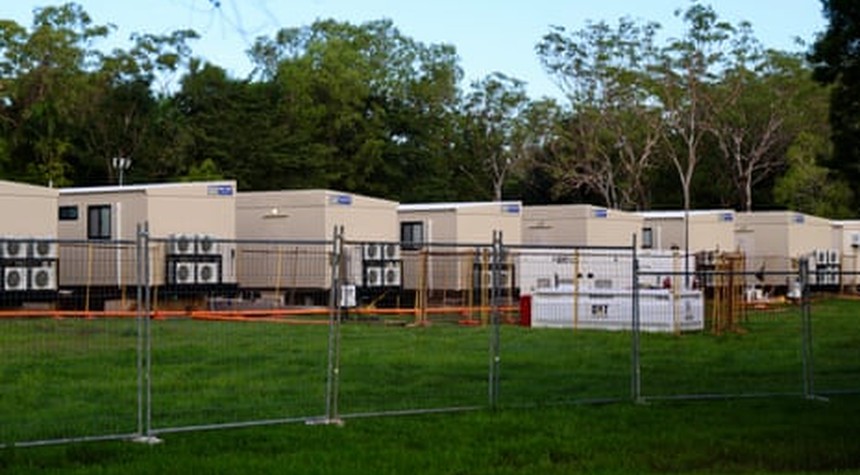
The Northern Territory government relocated these families from an emergency shelter in Darwin to the Batchelor Institute, approximately 100 kilometers south of the capital. What was described by officials as a “more stable, comfortable and culturally appropriate environment” has been experienced by residents as something quite different.
James Parry, a traditional owner from Nauiyu, described conditions that would be unacceptable in any Western democracy. “What they’re doing to us, it’s like a prison camp,” Parry stated. He reports that security guards shine torches through windows at night to check if residents are sleeping. One must pause to consider such treatment of citizens whose only transgression was fleeing a natural disaster.
The security measures extend well beyond nighttime checks. Every resident must sign in and out at a security gate. Vehicles undergo routine searches. Personal bags are inspected, including women’s handbags searched by male guards. These are not suspected criminals. These are families who lost their homes to flooding.
The facility itself has been transformed from an educational institution on the edge of Litchfield National Park into what resembles a detention center, surrounded by a ten-foot temporary fence erected specifically after the evacuees arrived. Children now run along fence lines while their parents wait for word on when they might return home.
Perhaps most concerning is the government’s restriction of access to the site. Several Aboriginal organizations, including the Northern Land Council, Danila Dilba Health Service, and the Northern Australian Aboriginal Justice Agency, have been excluded from the emergency response. These organizations typically serve as vital links between indigenous communities and government services, yet they have been blocked from entering without special permission.
The restrictions extended even to federal officials. Senator Malarndirri McCarthy, the federal minister for Indigenous Australians, was prevented from entering the Batchelor evacuation site shortly after residents were relocated. Matthew Ryan, chair of the Northern Land Council, was similarly refused entry when attempting to meet with traditional owners. He was informed that future access would require 24 hours’ notice and ministerial approval.
These are extraordinary measures that demand explanation. When a government restricts elected officials and community organizations from visiting citizens in emergency housing, when it searches personal belongings and monitors sleeping patterns, it crosses a line that separates assistance from control.
The Northern Territory government’s chief executive for the Department of Children and Families defended the relocation as providing families the ability to “live more independently while they recover.” The disconnect between this official statement and the lived experience of the evacuees could hardly be more stark.
As these families await news of when they might return home, the question persists: Is this how a free society treats its most vulnerable citizens in their hour of need? That is the question Australians must now answer.
And that is the way it is.
Related: Audio Recordings Point to Possible Qatari Pressure on ICC Prosecutor Karim Khan