
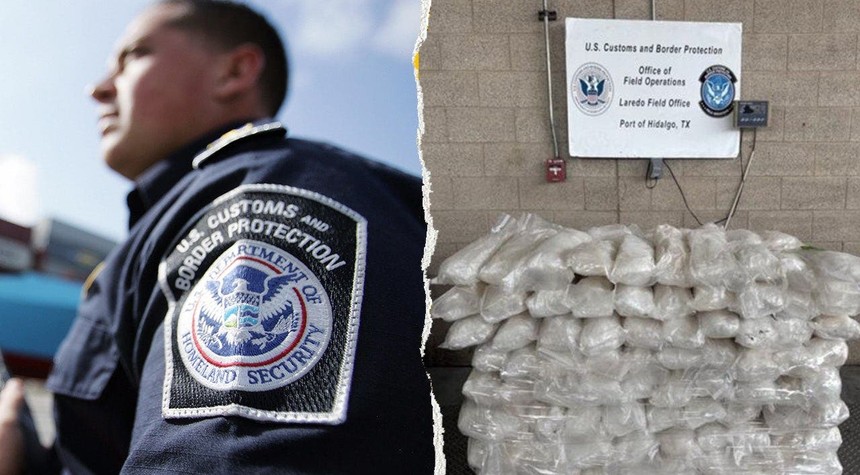
Customs and Border Protection officers intercepted 908 pounds of methamphetamine last Tuesday during what began as a routine inspection of a commercial truck at the southern border. The narcotics, valued at approximately $8.1 million, were concealed within pallets of ceramic tiles.
The discovery underscores both the persistent ingenuity of drug trafficking organizations and the critical role of border enforcement personnel in stemming the flow of dangerous substances into American communities. Port Director Carlos Rodriguez acknowledged the significance of the operation, noting that CBP officers work continuously to facilitate legitimate commerce while intercepting contraband.
The initial alert came during a canine unit screening. Upon closer examination, officers discovered 200 packages of white powder hidden within the tile shipment. The methamphetamine was extracted and the investigation turned over to appropriate authorities.
This seizure represents merely the latest chapter in an ongoing struggle against sophisticated smuggling operations. The pattern of concealment within legitimate cargo shipments has become increasingly common. In February, officers detained a truckload of roses that concealed more than 515 pounds of cocaine. On April 2, authorities discovered 298 pounds of cocaine worth roughly $2.6 million hidden among a shipment of carrots. Two weeks following that incident, CBP stopped 1,002 pounds of cocaine valued at $8.9 million disguised as chayote, a type of squash native to Mexico.
The frequency and scale of these operations raise important questions about border security resources and priorities. House Speaker Mike Johnson has indicated that the House will move forward with the Senate funding package for Immigration and Customs Enforcement and Border Patrol. The decision comes amid concerns that the Department of Homeland Security faces a funding shortfall, with insufficient time remaining to complete a lengthier budget reconciliation process.
The reality confronting border enforcement agencies is stark. Drug trafficking organizations continue to adapt their methods, utilizing everything from commercial vehicles to sophisticated drone technology. Officials in border states have warned about the increasing use of unmanned aerial systems to transport narcotics across the boundary, presenting new challenges for interdiction efforts.
These seizures, while significant, represent only the contraband that authorities successfully intercept. The question of how much evades detection remains a matter of concern for law enforcement and policymakers alike. Each successful interdiction demonstrates the capability and dedication of border personnel, yet also serves as a reminder of the volume of illegal narcotics targeting American communities.
The methamphetamine crisis continues to extract a devastating toll across the nation. The drug’s addictive properties and the ease with which it can be manufactured make it particularly attractive to trafficking organizations. Street-level distribution of such quantities would reach countless individuals, making each seizure a meaningful victory in a larger campaign.
As Congress considers funding levels for border operations, incidents such as this week’s methamphetamine seizure provide concrete evidence of the challenges facing enforcement agencies. The balance between facilitating legitimate international commerce and preventing the entry of dangerous contraband requires both adequate resources and operational flexibility. The men and women of Customs and Border Protection continue to perform this difficult mission, one inspection at a time.
Related: Audio Recordings Point to Possible Qatari Pressure on ICC Prosecutor Karim Khan