
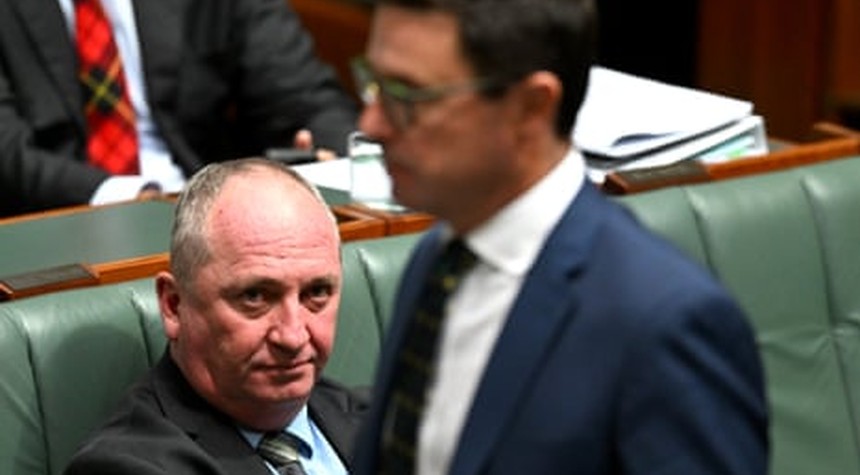
The political landscape in Australia has shifted this week as David Littleproud, leader of the National Party, addressed the departure of former deputy prime minister Barnaby Joyce from the party ranks.
In what can only be described as a measured response to a significant political rupture, Littleproud spoke publicly about Joyce’s decision to leave the National Party, emphasizing both disappointment and an openness to future reconciliation. The development marks a notable moment in Australian conservative politics, where internal party dynamics have once again come to the forefront of national attention.
Littleproud made clear that while Joyce has not joined the populist One Nation party, his departure represents a substantial break with the organization that brought him to prominence. The National Party leader expressed particular concern about Joyce’s decision to walk away from the party membership and the volunteers who invested their time and energy without financial compensation, driven purely by belief in the party’s mission.
“Our movement is bigger than any individual,” Littleproud stated, underscoring a fundamental principle of party politics that transcends personal ambitions or grievances. This sentiment reflects a broader understanding that political parties must maintain institutional integrity beyond the personalities that populate their ranks at any given moment.
The circumstances leading to Joyce’s departure trace back to leadership decisions made following electoral contests. Littleproud noted that he challenged Joyce after the 2022 election, ultimately prevailing in that contest while keeping Joyce on the frontbench. However, following the 2025 election, Littleproud determined that new voices needed opportunities to contribute to the party’s direction, including Ross Cadell, who has been working alongside Matt Canavan on emissions policy.
This decision to elevate newer members appears to have been the breaking point for Joyce, who had already distanced himself from party room meetings for several weeks prior to his formal departure. Littleproud characterized such absences as not entirely unusual in parliamentary politics, though the formal severing of party ties represents something altogether different.
What remains striking about Littleproud’s response is his insistence on maintaining open lines of communication. Despite the public nature of this political divorce, the National Party leader stated he harbors no personal animosity toward Joyce and keeps his door and phone line available. This approach suggests a pragmatic understanding that Australian politics, particularly in regional and rural constituencies where the Nationals hold sway, often requires flexibility and the possibility of future collaboration.
The situation illustrates the delicate balance party leaders must strike between maintaining discipline and unity while managing strong personalities and competing ambitions within their ranks. Littleproud acknowledged the difficulty of making tough decisions about team composition, noting that Joyce himself faced similar challenges during his tenure as leader.
As Australia’s conservative coalition navigates its role in opposition, this internal reshuffling within the junior partner carries implications for the broader political right. The question now becomes whether Joyce will chart an independent course or eventually find his way back to the party that defined much of his political career.
Related: Democrats Face Questions Over Past National Guard Criticism Following Washington Shooting