
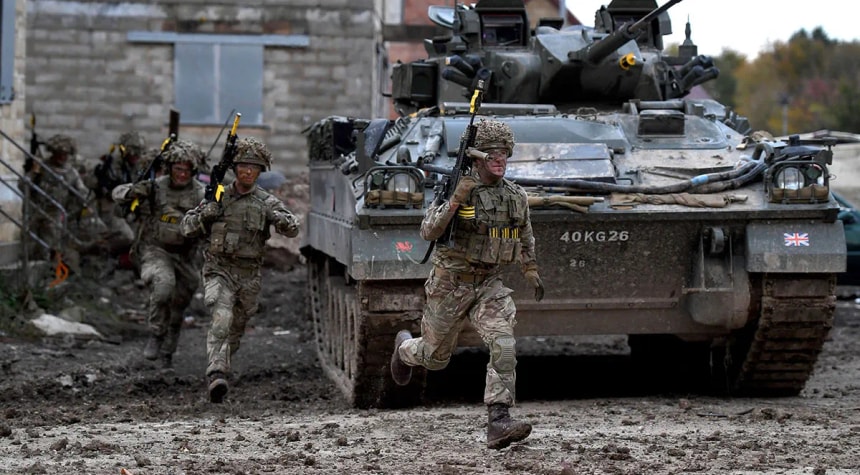
Britain is undertaking its most significant military mobilization effort since the Cold War, contacting thousands of former service members to assess reserve capabilities as security concerns escalate across Europe. The outreach reflects growing alarm within the British government over what officials describe as a deteriorating threat environment driven primarily by Russian aggression.
Secretary of State for Defence Wes Streeting confirmed Friday that the Ministry of Defence has begun writing to former military personnel to verify contact information and catalog their skills. The government seeks to ensure adequate preparation for potential national emergencies or armed conflict. This represents a marked departure from peacetime military planning and signals London’s serious assessment of current risks.
The timing of this mobilization coincides with a stark warning from the International Institute for Strategic Studies. The research organization reported Thursday that suspected Russian-directed sabotage incidents across Europe increased sixteen percent in the year ending September 2026. Germany and Poland bore the brunt of these attacks, accounting for more than half of documented cases. The think tank cautioned that a mass-casualty event resulting from such sabotage could fracture European unity and trigger demands for military retaliation.
Streeting addressed public concerns directly, stating his intention was to keep the country alert rather than alarmed. However, he acknowledged that recent events compel vigilance. Russian military incursions into Polish airspace, widespread sabotage operations across the continent, and threats against British military installations from Iranian-linked actors have fundamentally altered Britain’s security calculus.
Last week’s incident underscored the immediacy of these concerns. A suspected Russian projectile landed in eastern Poland approximately sixty miles from a British-led military exercise. The timing proved particularly notable as it occurred on the same day Britain’s defense secretary and chief of the air staff were visiting troops in the region.
Streeting articulated the government’s strategic reasoning with clarity. Increased readiness, he argued, serves as deterrence. The more prepared Britain stands to face potential conflicts, the less likely adversaries will be to initiate them. This calculation drives current policy and reflects traditional defense doctrine applied to contemporary circumstances.
The Ministry of Defence’s official statement indicated that service chiefs are requesting Strategic Reserve members to maintain contact and update their information. This provides defense planners with a comprehensive understanding of available skills and experience that could be mobilized if circumstances require. In coming months, these reservists will have opportunities to volunteer for training and exercises, including Britain’s participation in NATO’s Steadfast Defender operation scheduled for next spring.
The Royal Air Force has simultaneously implemented enhanced security measures at military bases. These include deploying hardened aircraft shelters and installing anti-drone netting to protect fighter jets from potential attacks. Britain’s domestic intelligence service and defense officials have warned companies supplying military equipment to Ukraine that they represent potential targets for Russian saboteurs.
The government has committed substantial resources to these security enhancements. An additional four hundred seventy million pounds will strengthen protection at military sites through improved physical barriers, surveillance systems, and counter-drone capabilities. Fifteen million pounds has already been invested specifically in drone and counter-drone technology, while restricted airspace now covers forty-four critical defense installations.
These British actions unfold against a backdrop of diplomatic maneuvering involving Washington and Moscow. President Donald Trump stated Thursday that he requested Russian President Vladimir Putin pull back military aggression against Europe. Trump indicated this request occurred during a meeting in China last week, expressing belief it could facilitate an agreement to end the war in Ukraine. These comments followed Trump’s meeting with NATO Secretary-General Mark Rutte in Florida, after which both leaders issued a joint statement urging Russia not to expand its Ukrainian offensive.
The convergence of military preparation and diplomatic engagement reflects the complex security environment facing Western nations. Britain’s mobilization demonstrates that European powers are taking concrete steps to defend their interests while hoping diplomacy may yet prevent wider conflict.
Related: Authorities in Germany Dismantle Terror Cell Allegedly Planning Synagogue Attacks