
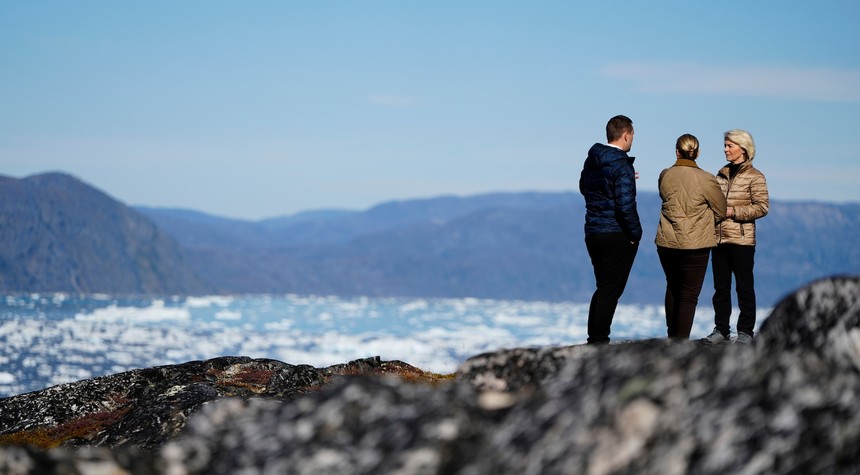
The European Union has committed more than $232 million in new investments to Greenland, marking a significant escalation in Brussels’ efforts to strengthen its presence in the strategically vital Arctic region.
European Commission President Ursula von der Leyen traveled to Greenland on Monday to personally sign the investment declaration alongside Greenlandic Prime Minister Jens-Frederik Nielsen and Danish Prime Minister Mette Frederiksen. The timing of this substantial financial commitment cannot be divorced from recent trans-Atlantic tensions over the island’s future.
“Greenland can count on the EU,” von der Leyen declared, emphasizing that the partnership “will create new opportunities and a strong and engaged EU in both Greenland and the Arctic, because Greenland is a strategic ally and a trusted friend.”
The 200-million-euro package targets critical infrastructure and economic development across the vast semiautonomous Danish territory. Funds have been allocated for education, fisheries development, internet connectivity improvements, hydropower systems, and the exploitation of critical raw minerals. Additional resources will support housing construction, small business development, and sustainable tourism initiatives.
This renewed European engagement follows months of heightened tension sparked by President Trump’s repeated assertions that the United States should assume control of Greenland for national security purposes. Those claims generated considerable pushback from both Greenlandic and Danish leadership, and created notable friction among NATO allies at a time when alliance unity remains essential.
In January, Denmark and seven European allies dispatched military personnel to Greenland for exercises officially described as Arctic security training. The deployment, however, carried an unmistakable secondary message about the island’s sovereignty. Denmark, Finland, France, Germany, the Netherlands, Norway, Sweden, and the United Kingdom participated in that show of support.
President Trump responded to that European military deployment with threats of new tariffs against all eight participating nations. The European allies issued a joint statement warning that “tariff threats undermine trans-Atlantic relations and risk a dangerous downward spiral,” while affirming their commitment to upholding sovereignty.
The tariff threats were ultimately withdrawn after NATO reached an agreement on Arctic security arrangements. Nevertheless, the episode exposed real vulnerabilities in trans-Atlantic relations and demonstrated Europe’s determination to maintain its influence in the Arctic.
On Monday, as von der Leyen signed the investment package, eleven NATO countries launched new military exercises in Greenland. The Arctic Shield drills involve approximately 400 military personnel, including special forces trained specifically for Arctic operations from Canada, Denmark, and Finland. The exercises will continue through September 18th.
Notably absent from these drills are American forces, an omission that speaks volumes about the current state of Arctic security coordination.
Greenland’s strategic importance extends well beyond its geographic position. The island possesses substantial mineral resources increasingly vital to modern technology and defense systems. Its location commands key maritime approaches and offers potential military installations that could prove decisive in great power competition.
As the Arctic continues to warm and new shipping routes become viable, Greenland’s relevance will only increase. The European Union’s substantial investment represents a calculated effort to ensure that Brussels maintains significant influence over the island’s development and future orientation. For internationally-aware observers, this investment package represents far more than economic assistance. It constitutes a clear geopolitical statement about Europe’s Arctic ambitions and its determination to remain a relevant player in high-latitude security affairs.
Related: German Regional Election Delivers Severe Blow to Chancellor Merz’s Governing Coalition