
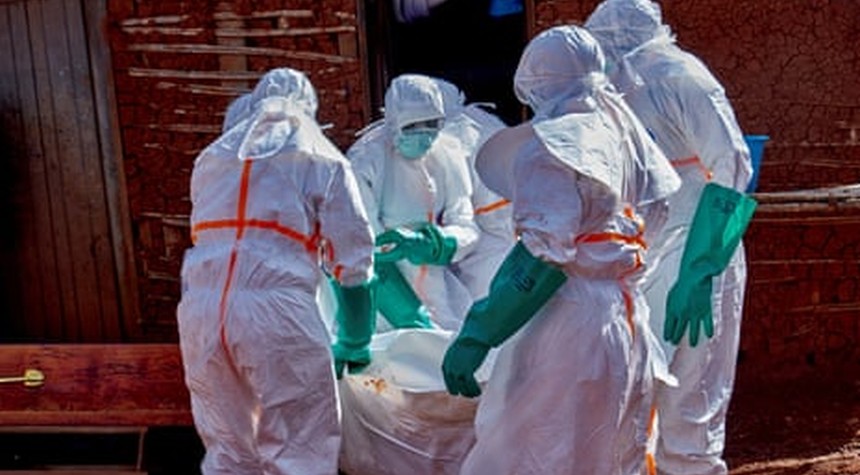
The Centers for Disease Control and Prevention announced Thursday it will deploy $107 million in emergency funding to combat an escalating Ebola outbreak in the Democratic Republic of the Congo and Uganda, even as officials maintain that the global risk remains low.
The outbreak, now confirmed as the third largest on record, has reached a concerning milestone with nearly 1,000 confirmed cases spread across 31 health zones in the DRC. An additional 31 cases have been documented in Kampala, Uganda’s capital city.
Dr. Satish K. Pillai, incident manager for the CDC’s Ebola response, briefed reporters on the situation Thursday, emphasizing that the outbreak requires strong immediate support. The CDC has positioned 23 field staff members to support disease investigations, with 125 total personnel deployed across both affected nations.
The outbreak involves Bundibugyo viral disease, a rare zoonotic species of Ebola that causes hemorrhagic fever. This particular strain has proven deadly, killing between 30 and 50 percent of those infected during recent outbreaks in the region. The disease emerged approximately one month ago along the western border of the DRC and the eastern border of Uganda.
The timing of this public health crisis coincides with the FIFA World Cup, jointly hosted by Canada, Mexico, and the United States. The tournament has drawn visitors from around the globe, raising questions about potential disease transmission. However, CDC officials have taken precautionary measures, including twice-weekly conference calls with host cities across the United States.
To date, health authorities in World Cup host cities have reported only illnesses typical of large sporting events, such as heat-related conditions. No cases of Ebola have been detected in North America.
African health officials have issued warnings that this outbreak could potentially surpass the worst Ebola outbreak on record if current infection rates continue. That devastating epidemic, which occurred between 2014 and 2016, infected more than 28,000 people and claimed 11,000 lives. Some experts suggest the current outbreak may require up to a year to contain.
The deployment of emergency funding demonstrates the United States’ commitment to preventing the spread of infectious diseases before they reach American shores. The CDC’s robust response includes not only financial resources but also experienced personnel trained in disease surveillance and containment protocols.
While officials stress that the global risk remains low, the situation bears watching. The outbreak’s location along a porous international border, combined with the challenges of delivering healthcare in remote regions of Central Africa, creates conditions that could allow the disease to spread further.
The CDC’s proactive stance reflects lessons learned from previous Ebola outbreaks, when delayed international response allowed the virus to gain a foothold that proved difficult to contain. This time, American health officials are acting swiftly to support local authorities before the situation deteriorates further.
As the World Cup proceeds and international travel continues at high volumes, the CDC’s vigilance serves as a reminder that in our interconnected world, disease outbreaks thousands of miles away require immediate attention and substantial resources to protect public health at home and abroad.
Related: Defense Secretary Criticizes European Allies as Pentagon Plans Major Force Review