
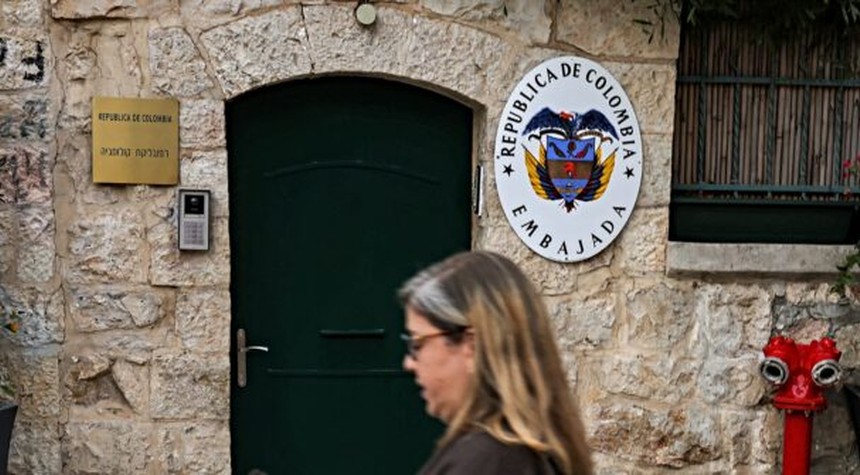
Colombia officially opened its embassy in Jerusalem on Wednesday, marking a significant restoration of diplomatic relations with Israel and reversing the abrupt severance of ties ordered by the previous administration.
The ceremony, conducted Wednesday morning local time, was presided over by Colombian Foreign Minister Omar Bula and his Israeli counterpart Gideon Sa’ar. The event represents the fulfillment of a central campaign promise made by Colombia’s conservative President Abelardo de la Espriella.
Colombia now joins nine other nations in maintaining its embassy in Jerusalem, a decision that carries considerable diplomatic weight in the international community. The move restores decades of friendly relations between Colombia and Israel that dated back to 1957, when the two nations first established formal diplomatic ties.
Foreign Minister Sa’ar characterized the day as historically important for both nations, recalling a conversation he had with then-candidate de la Espriella in Buenos Aires. According to Sa’ar’s account, de la Espriella stated unequivocally that should he be elected president, he would immediately relocate Colombia’s embassy to Jerusalem. The promise, Sa’ar noted, has been kept.
Sa’ar also pointed to a broader trend, stating that the number of embassies in Jerusalem has doubled since he assumed office less than two years ago. He expressed confidence that additional nations would follow suit.
The Colombian Foreign Ministry outlined practical objectives for the new diplomatic presence, including enhanced cooperation in security matters, trade, investment, agriculture, and scientific and technological development. The embassy will also provide consular services to Colombian nationals residing in Israel. Ambassador Tania Gilinski will lead the mission.
This diplomatic realignment represents a sharp departure from the policies of Marxist former President Gustavo Petro, who unilaterally ruptured relations with Israel in 2024. Petro’s tenure marked an unprecedented disruption in what had been consistently cordial bilateral relations spanning nearly seven decades.
The deterioration began in the aftermath of Hamas’s October 7, 2023, terrorist attack on Israel. Petro launched an international campaign condemning Israel’s response, making inflammatory comparisons between Gaza and Nazi concentration camps. In May 2024, he formally severed diplomatic ties with Israel.
President de la Espriella signaled his intentions even before assuming office. In June, shortly after his election, he affirmed that Colombia would strengthen its relationship with Israel to unprecedented levels. He took office on August 7 and has moved swiftly to implement his stated foreign policy objectives.
The embassy opening represents more than symbolic gestures. It reflects substantive policy differences between Colombia’s current and former administrations regarding Middle Eastern affairs and international partnerships. The conservative government views Israel as a strategic partner in multiple sectors vital to Colombia’s national interests.
This diplomatic shift also positions Colombia distinctly within Latin American politics, where several nations have taken varying stances on Israeli-Palestinian issues. The decision to locate the embassy in Jerusalem, rather than Tel Aviv where most nations maintain their diplomatic missions, underscores the de la Espriella administration’s commitment to close bilateral ties.
The restoration of full diplomatic relations, complete with an embassy in Jerusalem, signals Colombia’s return to its traditional foreign policy alignment and marks a definitive end to the Petro era’s approach to Israel.
Related: Jamaica Accepts First Third-Country Deportees Under New US Agreement