
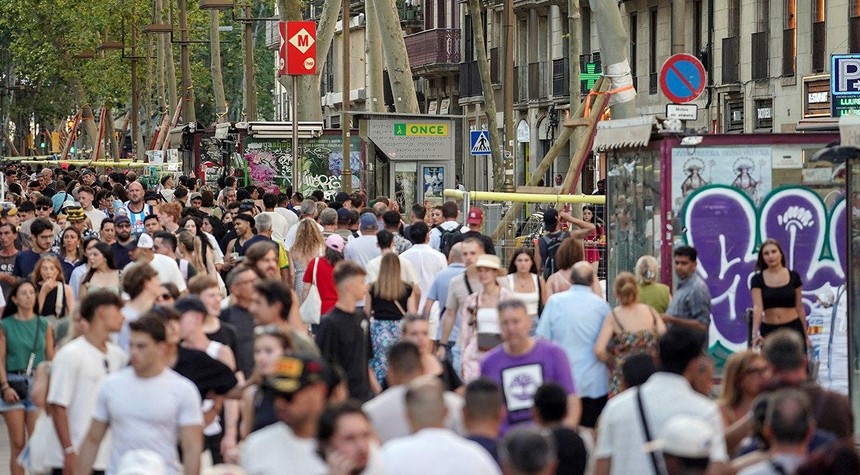
Spain finds itself grappling with a housing crisis that has driven hundreds of thousands of residents into the streets of Barcelona, Madrid, and other major cities in recent months. The demonstrations reflect mounting frustration over housing costs that many attribute directly to the pressures of mass tourism and short-term vacation rentals.
The facts are these: Barcelona and its surrounding region welcomed 26.1 million visitors in 2025, generating approximately $15.4 billion in direct tourism spending, according to the Barcelona Tourism Observatory. While these figures represent significant economic activity, they have come at a considerable cost to permanent residents who find themselves priced out of their own neighborhoods.
Jordi Lippe-McGraw, a travel writer who relocated from New York City to Barcelona six weeks ago, has observed the situation firsthand. “Finding an apartment in Barcelona definitely gave me a better understanding of how competitive the housing market can be,” she told reporters. “It’s a city where so many people want to live. There’s a lot of pressure on available housing.”
The tension reached a symbolic breaking point with the forced eviction of María del Carmen Abascal, an 87-year-old Spanish pensioner, whose case became emblematic of the broader affordability crisis. When she died on October 7, thousands took to the streets across Spain in cities including Madrid, Valencia, Barcelona, Hospitalet de Llobregat, and Málaga.
Barcelona Mayor Jaume Collboni has publicly acknowledged the severity of the situation, as has Spanish Prime Minister Pedro Sánchez, who addressed the issue at a recent Barcelona event. José Antonio Donaire, the city’s commissioner for sustainable tourism, stated plainly, “Barcelona began rethinking tourism back in 2017. But the message of the city now is: Not one tourist more.”
The local government has taken concrete steps to address the crisis. On April 1, Barcelona implemented a combined flat city surcharge of $5.60 with the regional Catalan tourist tax, creating one of the highest visitor taxes in Europe. This raised the total overnight tax for hotel guests to between $7.84 and $13.44, according to the Barcelona City Council.
At the heart of the dispute lies the conversion of residential apartments into short-term vacation rentals by real estate companies seeking more lucrative returns. Residents argue this practice has fundamentally altered the housing market, removing units from the long-term rental pool and driving up costs for those who actually live and work in these cities.
September protests extended to Barcelona-El Prat Airport, where demonstrators opposed expansion plans on both environmental grounds and concerns about overtourism. The protests have been both loud and defiant, with some activists blocking access to popular beaches.
For Lippe-McGraw, living in a residential neighborhood has provided some insulation from the most visible protests. Yet her experience securing housing offered a window into the challenges facing all Barcelona residents, whether newcomers or natives.
The situation in Barcelona reflects broader tensions emerging across popular European destinations where tourism’s economic benefits collide with residents’ quality of life. As local and federal governments attempt to implement solutions, the fundamental question remains: how to balance economic prosperity with housing accessibility for the people who call these cities home.
Related: United States Accelerates Hypersonic Weapons Development Despite Soaring Costs