
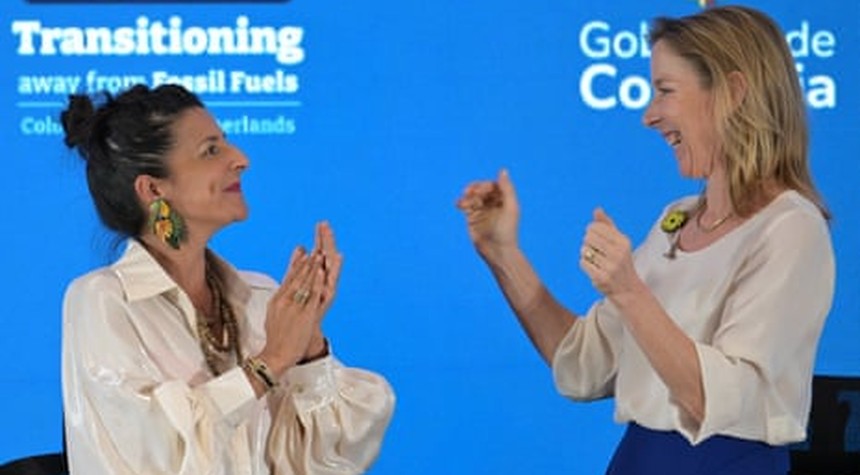
Nearly 60 nations have committed to developing voluntary roadmaps for eliminating fossil fuel production and consumption, marking a significant departure from traditional United Nations climate negotiations that have yielded limited results over three decades of rising emissions.
The commitment emerged from a two-day conference in Colombia this week, where participating governments agreed to create national plans detailing how they will transition away from coal, oil, and natural gas. The initiative represents what organizers characterize as a more action-oriented approach than the annual UN climate summits, which have continued even as global greenhouse gas emissions have climbed steadily higher.
The coalition of 59 participating nations conspicuously excludes the world’s largest emitters. The United States, China, India, and Russia did not attend, nor did major petroleum-producing states including Saudi Arabia, Qatar, and the United Arab Emirates. This “coalition of the willing” strategy deliberately limited attendance to countries prepared to commit to fossil fuel elimination, though organizers indicated other nations may join later.
Despite the notable absences, the participating countries represent substantial economic weight, accounting for more than half of global GDP, nearly one-third of worldwide energy demand, and approximately one-fifth of fossil fuel supply. Nearly half of the member nations are themselves fossil fuel producers who will be expected to outline plans for winding down their extraction operations.
Irene Vélez Torres, Colombia’s environment minister who chaired the conference, framed the initiative in historical terms. “We decided not to resign ourselves to an economy built on the destruction of life,” she stated. “When people look back on us from the future, they will remember whether or not we rose to the challenge of our time.”
The roadmap framework maintains considerable flexibility. No specific requirements govern how plans should be structured, nor have organizers established firm deadlines for completing the transition away from fossil fuels. This approach acknowledges the varying circumstances of participating nations, from developed economies to developing countries with different energy infrastructure and economic dependencies.
Colombia and the Netherlands, serving as co-hosts for this inaugural conference on fossil fuel transition, organized discussions covering trade implications, debt considerations, producer nations’ economic dependence on fossil fuel exports, and strategies for reducing energy demand. Colombia published a draft roadmap during the conference and established a scientific panel to provide guidance to participating countries.
France became the first developed nation to release a national fossil fuel phaseout roadmap on Tuesday, potentially setting a precedent for other advanced economies in the coalition.
Stientje van Veldhoven, the Netherlands’ minister for climate and green growth, emphasized the intentional flexibility of the approach. “We see the roadmaps as the tool for the ambition with which they came here,” she explained. “There will be different speeds between countries. We should allow for this and acknowledge that countries start from a different position, have different challenges, so that it cannot be one size fits all.”
The conference included preliminary sessions where activists, Indigenous leaders, scientists, and policy experts gathered in Santa Marta to examine the social and economic impacts of fossil fuels and explore methods for curtailing demand.
Whether this voluntary coalition approach proves more effective than the UN framework remains to be seen. The absence of the world’s largest emitters raises questions about the initiative’s ultimate impact on global emissions, though supporters argue that demonstrating viable transition pathways may eventually persuade reluctant nations to participate.
Related: Australian Government Bars Tribal Leaders and Officials from Visiting Flood Evacuees