
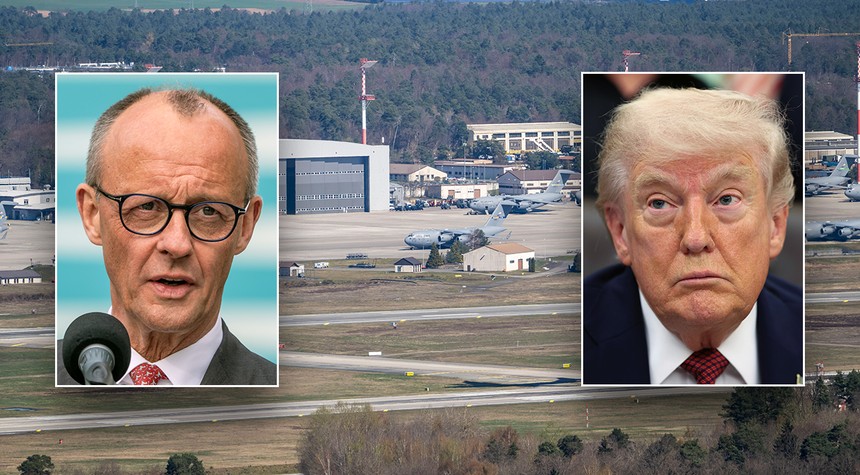
The Trump administration announced Wednesday that it is conducting a comprehensive review of American military presence in Germany, potentially signaling a significant shift in the United States’ European defense posture.
President Donald Trump disclosed the review in a statement Wednesday afternoon, indicating that the administration is “studying and reviewing the possible reduction of Troops in Germany.” The President stated that a final determination would be reached “over the next short period of time,” though no specific timeline was provided.
This development represents a notable escalation in the ongoing tensions between Washington and Berlin over defense burden sharing within the NATO alliance. The announcement follows closely on the heels of pointed criticism directed by President Trump toward German Chancellor Friedrich Merz regarding Iran’s nuclear program.
Just one day prior, the President publicly rebuked Chancellor Merz, asserting that the German leader “doesn’t know what he’s talking about” concerning Iran’s nuclear capabilities. This exchange underscores the widening rift between the two nations on matters of international security and diplomatic strategy in the Middle East.
The United States currently maintains a substantial military footprint in Germany, with tens of thousands of American service members stationed across multiple bases throughout the country. These forces have served as a cornerstone of NATO’s collective defense architecture since the end of World War II, providing both a deterrent against potential adversaries and a rapid deployment capability for operations across Europe, Africa, and the Middle East.
The potential drawdown comes as the Trump administration has intensified its calls for European allies to assume greater responsibility for regional security matters. U.S. Ambassador to NATO Matt Whitaker recently articulated the administration’s position that European nations should take a more active role in securing critical international waterways, specifically citing the Strait of Hormuz as an area where allied participation is essential.
The Strait of Hormuz, a narrow passage between the Persian Gulf and the Gulf of Oman, serves as a vital chokepoint for global energy supplies, with approximately one-fifth of the world’s petroleum passing through its waters. The Trump administration’s appeal for European involvement in securing this strategic waterway reflects a broader effort to redistribute security responsibilities among Western allies.
This troop review also arrives at a particularly sensitive moment in European security, as the continent continues to grapple with questions about its defense independence and reliance on American military power. The administration’s consideration of force reductions in Germany may serve as leverage in ongoing negotiations over NATO funding commitments and burden sharing arrangements.
The German government has not yet issued a formal response to the announcement, though diplomatic sources suggest that such a reduction would be met with significant concern in Berlin and other European capitals. Any substantial withdrawal of American forces from Germany would represent the most significant realignment of U.S. military assets in Europe in decades.
As this review proceeds, the international community will be watching closely to see whether this represents a fundamental shift in American strategic thinking or serves primarily as a negotiating tactic to encourage greater European defense spending and operational participation in global security missions.
Related: Two Jewish Men Stabbed in North London as Antisemitic Attacks Continue