
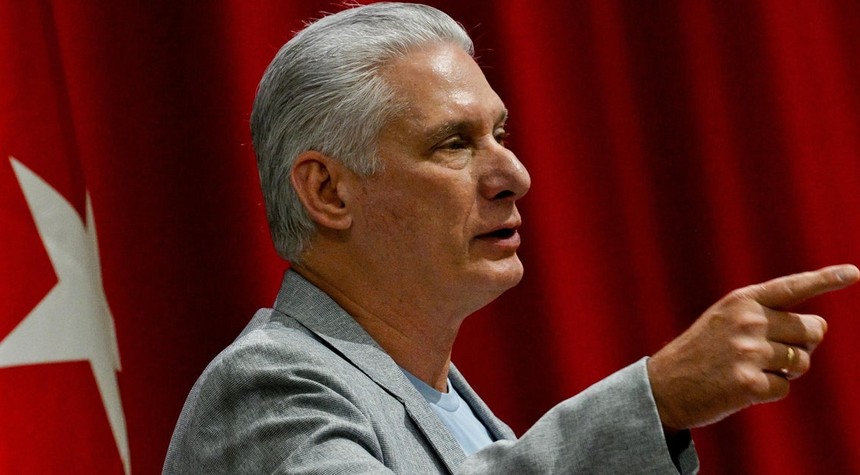
Cuban President Miguel Díaz-Canel Bermúdez has issued a public statement asserting that Cuba “poses no threat” to the United States following reports that the island nation has accumulated approximately 300 military drones and may have discussed potential strikes against American military installations.
The Cuban leader’s statement, delivered through social media channels, did not directly address the specific allegations regarding the drone arsenal. Instead, Díaz-Canel focused his remarks on what he characterized as ongoing threats from Washington, defending his nation’s right to self-defense while simultaneously denying any aggressive intentions toward the United States or its territories.
“The threats of military aggression against Cuba from the world’s greatest power are well-known,” Díaz-Canel stated. “The threat itself already constitutes an international crime. If it were to materialize, it would trigger a bloodbath with incalculable consequences, plus the destructive impact on regional peace and stability.”
The timing of these assurances carries particular significance. Reports indicate that Cuban military planners may have discussed targeting the U.S. naval base at Guantanamo Bay and potentially Key West, Florida. While these reports remain unconfirmed through independent verification, notably, Cuban officials have not denied the existence of military drones within their arsenal.
The Cuban president’s statement emphasized his government’s position that any defensive preparations stem from what he described as “multidimensional aggression” from the United States. He maintained that Cuba retains “the absolute and legitimate right to defend itself against a military onslaught,” while arguing such defensive posturing should not serve as justification for military action against his nation.
“Cuba poses no threat, nor does it have aggressive plans or intentions against any country,” Díaz-Canel insisted. “It has none against the U.S., nor has it ever had any—something the government of that nation knows full well, particularly its defense and national security agencies.”
This exchange occurs against a backdrop of renewed consideration within the Trump administration regarding potential military intervention in Cuba. Such discussions represent a significant shift in the relationship between Washington and Havana, which has oscillated between periods of cautious engagement and outright hostility throughout the past six decades.
The strategic implications of a substantial drone arsenal positioned just 90 miles from American shores cannot be understated. Modern military drones, depending on their capabilities and range, could theoretically pose threats to both military installations and civilian infrastructure in southern Florida.
The situation presents a familiar pattern in Cuban-American relations: accusations and counter-accusations, with each side claiming defensive postures while the other perceives aggressive intent. What remains clear is that the accumulation of military hardware by a nation long considered adversarial to American interests warrants serious attention from defense and intelligence communities.
As this situation develops, the fundamental question persists: whether Cuba’s military preparations represent genuine defensive measures against perceived American aggression, or whether they signal a more assertive posture from a regime that has historically aligned itself with nations antagonistic to American interests. The answer to that question will likely shape policy decisions in Washington for months to come.
Related: French Football Match Abandoned After Mob Storms Field in Nantes Stadium