
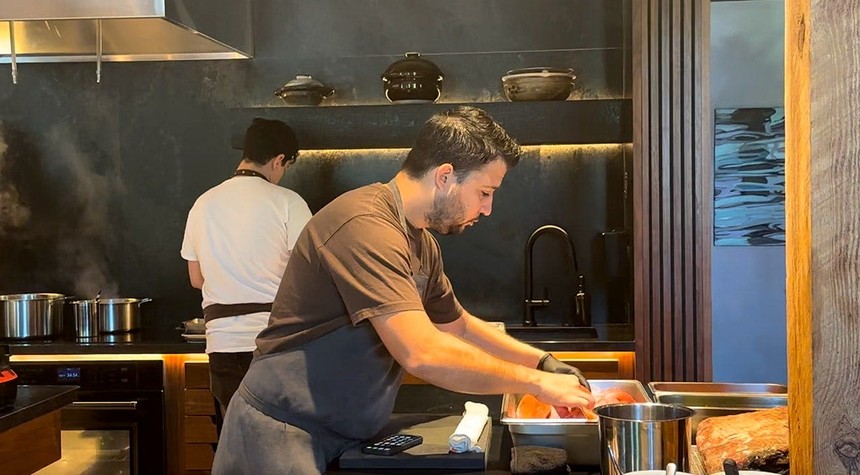
Four months after opening in West Palm Beach, Florida, a Cuban restaurant named Emelina has achieved what no other establishment of its kind has accomplished in culinary history. The restaurant has become the first Cuban venue in the world to receive a Michelin star, a distinction that typically requires years, sometimes decades, of dedicated pursuit.
For chef and co-owner Osmel Gonzalez, 36, who spent the first twenty-two years of his life under communist rule in Cuba, the recognition represents far more than professional achievement. It stands as a testament to what Cuban cuisine can become when freed from the constraints of scarcity and authoritarian control.
The restaurant, named in honor of Gonzalez’s grandmother, presents a modern interpretation of traditional Cuban flavors while maintaining respect for the culture’s culinary heritage. Gonzalez emphasized that his approach is not about replacement but rather evolution. The restaurant sources most ingredients from South Florida, creating what the Michelin Guide described as “a unique story” through dishes such as poached local oysters with yucca foam and mushroom powder, alongside cherry tomatoes with Cuban oregano chimichurri and macadamia milk foam.
The chef’s perspective on Cuban cuisine has been shaped by direct experience with the limitations imposed by communist governance. According to Gonzalez, sixty-seven years of revolutionary rule have fundamentally hindered the development of Cuban culinary arts. When a population focuses on survival rather than creativity, innovation becomes impossible.
This observation carries weight beyond mere culinary criticism. It speaks to a broader reality about life under authoritarian systems, where basic necessities take precedence over artistic or cultural advancement. Cuban chefs on the island have spent generations concentrating on obtaining food rather than exploring its creative possibilities.
Emelina’s menu demonstrates what happens when those restrictions are lifted. Dishes such as Key West pink shrimp served with caimito, preserved turnip, and coconut-curry broth showcase unconventional approaches that would be impractical, if not impossible, in an environment defined by scarcity.
Gonzalez described his philosophy as one of honoring tradition while embracing possibility. The restaurant loves Cuban traditions and classic preparations, but seeks to take that foundation on what he calls “a journey of creativity.” This approach has clearly resonated with Michelin evaluators, who awarded the star based on the restaurant’s ability to demonstrate both refinement and the capacity to make simple ingredients shine.
The achievement arrives at a significant moment for Cuban cuisine on the international stage. While Cuban food has long been appreciated in communities with strong Cuban populations, particularly in South Florida, it has not traditionally received the same elevated culinary recognition as other Latin American cuisines.
Emelina’s Michelin star may signal a turning point. It demonstrates that Cuban cuisine, when given the resources and freedom to develop, can compete at the highest levels of gastronomy. The recognition also highlights an uncomfortable truth about how political systems affect cultural development, including something as fundamental as food.
For those who have escaped communist Cuba, Gonzalez’s success represents more than culinary excellence. It embodies the potential that emerges when human creativity is no longer suppressed by ideology and scarcity. His journey from surviving under communism to thriving in freedom tells a story that extends well beyond the kitchen.
Related: Vance Postpones Switzerland Trip as Iran Peace Talks Face Logistical Delays