
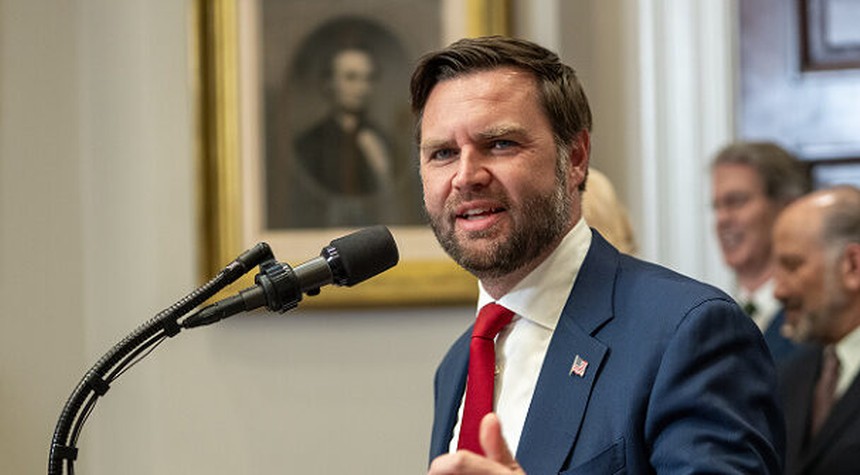
The White House announced Thursday that Vice President JD Vance has postponed his planned departure to Switzerland, where technical negotiations on the recently signed Iran peace framework were expected to commence.
The vice president had been scheduled to lead the American delegation to Europe for what would mark the first substantive follow-up discussions to the preliminary agreement President Donald Trump signed earlier this week. However, administration officials confirmed that logistical arrangements for the multilateral talks remain incomplete.
“As the Vice President said at his press conference, the plans for the upcoming technical talks have not been finalized, and the U.S. delegation has been prepared to depart at the first available opportunity,” the White House stated. “But the logistics of these negotiations have never been simple or predictable.”
The statement continued: “As of now the Vice President is not departing tonight. We will let you know as soon as we have a concrete update about next steps. We look forward to beginning technical talks as soon as possible.”
The postponement comes as both nations work to implement the memorandum of understanding signed by President Trump, which establishes a sixty-day framework for negotiating a comprehensive agreement to end current hostilities. The preliminary accord calls for an immediate cessation of military operations and commits both parties to refrain from future attacks during the negotiation period.
The framework agreement addresses several critical elements. It outlines the gradual withdrawal of the U.S. naval blockade in the region and calls for the reopening of the Persian Gulf and Strait of Hormuz to regular commercial shipping traffic. A monitoring mechanism would be established to ensure compliance from both Washington and Tehran.
Among the most significant provisions is a proposed three hundred billion dollar reconstruction and economic development package for Iran, to be assembled by the United States in coordination with regional partners. The agreement envisions the eventual lifting of American, United Nations, and international sanctions against the Islamic Republic.
In the interim period, the accord provides for waivers that would permit Iranian oil exports and banking transactions, along with the release of frozen Iranian assets held in foreign accounts.
Tehran has committed under the framework not to pursue nuclear weapons development. Iranian officials have agreed to negotiate the disposition of the nation’s existing enriched uranium stockpiles under International Atomic Energy Agency supervision, though the specific terms remain subject to the technical discussions now delayed.
Public reception of the preliminary agreement has been notably positive. Recent polling data indicates that fifty-three percent of Americans approve of the signed framework, with only thirteen percent expressing disapproval.
The postponement of Vice President Vance’s departure underscores the complexity inherent in diplomatic negotiations of this magnitude. Coordinating multilateral discussions involving not only American and Iranian delegations but also regional partners and international observers presents substantial logistical challenges.
The administration has emphasized its readiness to proceed once arrangements are finalized, signaling that the delay reflects procedural rather than substantive obstacles to advancing the peace process.
Related: Global Energy Crisis Eases as Vessels Begin Exiting Gulf Following 110-Day Blockade