
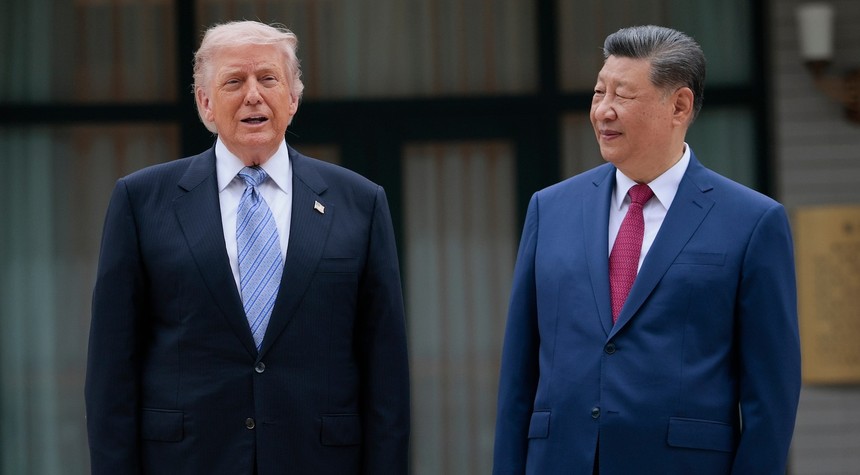
A bipartisan chorus of concern has emerged regarding Chinese support for Iranian military operations, with new pressure mounting on President Trump to address the matter directly when he meets with Chinese President Xi Jinping on Wednesday.
Thirteen Democratic lawmakers, all veterans of military service, have written to the White House urging the president to confront his Chinese counterpart over what they describe as Beijing’s provision of satellite imagery that has aided Iranian strikes against American forces. The letter follows a September assessment indicating that Chinese satellite data supported an Iranian attack on an airbase in Jordan this past July, an assault that claimed the lives of three American soldiers.
“Our servicemembers are paying the price in blood for this administration’s pathetic refusal to confront Beijing,” the lawmakers wrote in their appeal to the president. They characterized the upcoming summit as a critical opportunity to demand an end to Chinese support for Tehran’s military operations.
The gravity of the situation has prompted strong bipartisan language. Representative John Moolenaar, chairman of the House Select Committee on China, characterized Chinese cooperation with Iranian forces resulting in American casualties as “tantamount to an act of war against the United States.” In his own letter to the president last week, Moolenaar described the reported connection between Chinese imagery and lethal Iranian attacks as “a dramatic unilateral escalation.”
The State Department took action in May, sanctioning four China-based entities for providing satellite imagery that enabled Iranian military strikes against American forces in the Middle East. According to the department, at least one company collected images of U.S. facilities during the ongoing conflict at Tehran’s specific request.
Beijing has denied that its state-owned enterprises support Iran’s military efforts. For his part, President Trump appeared dismissive of the concerns when questioned about the matter earlier this month, suggesting that such intelligence gathering represents standard practice among major powers. “I think he’s behaved reasonably well,” Trump said of President Xi, adding that Chinese espionage activities mirror American intelligence operations abroad.
Representative Pat Ryan, a former Army intelligence officer who served in Iraq, expressed alarm at the implications. “What’s worse is that Trump knows, too, and hasn’t done a thing to stop it,” Ryan stated, emphasizing the dangers inherent in sophisticated intelligence falling into hostile hands.
Analysts expect the Wednesday summit to focus primarily on the broader energy crisis precipitated by the ongoing conflict. The administration is likely to request Chinese cooperation in isolating Iran’s economy from global markets, consistent with recent American strategy in the region. However, experts anticipate Beijing will prove resistant to such overtures, given its substantial economic interests in Iranian energy supplies.
The meeting represents the second summit between Trump and Xi since hostilities erupted in February, with both leaders facing domestic pressure to demonstrate resolve while managing the complex relationship between the world’s two largest economies. The satellite imagery controversy adds a new dimension to tensions already strained by trade disputes and regional security concerns.
Related: Twenty Nations Demand International Oversight of Artificial Intelligence Development