
Twenty nations released a joint statement Monday demanding increased international oversight of advanced artificial intelligence systems, marking the latest effort to establish global governance over rapidly evolving technology that has outpaced regulatory frameworks.
The statement, released by Finland’s president, reflects growing concerns among world leaders that artificial intelligence development has proceeded without adequate safeguards. The document explicitly states that AI must remain under human direction, oversight, and control, and must be developed in accordance with international law.
Notably absent from the list of signatories were representatives from the United States, the United Kingdom, and China, the three nations currently leading global AI development and investment. Their refusal to endorse the statement underscores the significant diplomatic challenges facing any attempt at international coordination on this technology.
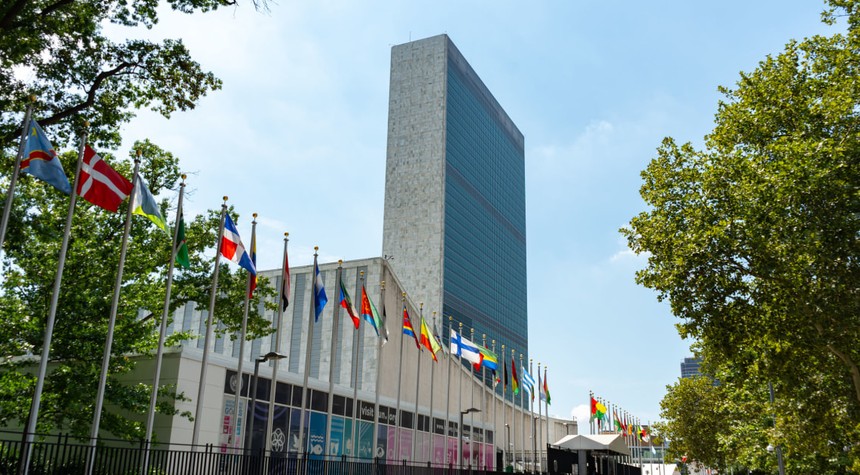
The timing of this statement is deliberate. It arrives one day before the United Nations General Assembly convenes its high-level general debate in New York, where political and business leaders will gather to negotiate agreements and establish priorities for the coming year. Artificial intelligence is expected to dominate both official proceedings and numerous side events throughout the week.
Among the signatories are Canadian Prime Minister Mark Carney, Kenyan President William Ruto, Netherlands Prime Minister Rob Jetten, Australian Prime Minister Anthony Albanese, and South African President Cyril Ramaphosa. The coalition also includes several foreign ministers, among them Turkey’s Hakan Fidan and the United Arab Emirates’ Sheikh Abdullah bin Zayed Al Nahyan.
The statement advances three specific proposals. First, it requests that companies conduct safety testing before deploying AI systems publicly and permit independent evaluators to assess potential risks. Second, it asks governments and regional organizations to develop common safety standards that would enable countries worldwide to evaluate AI models with appropriate scientific rigor. Third, and most significantly, it calls for United Nations members to consider establishing an international institution capable of setting standards, enabling verification, and convening member states when certain capability thresholds are reached.
The proposal for a new international institution represents the most ambitious element of this initiative. Such an organization would presumably function similarly to existing international regulatory bodies, though the statement provides limited detail about its potential structure or enforcement mechanisms.
Executive Director Nick Moes of The Future Society, an AI governance organization, praised the initiative while acknowledging the substantial work ahead. He noted that while the broad coalition signals genuine appetite for meaningful coordination, statements alone prove insufficient. Mobilizing diplomatic, political, and financial resources will be necessary to implement the changes these nations have identified as essential for maintaining control over advanced AI systems.
The United Nations Security Council and American representatives will conduct separate sessions dedicated to artificial intelligence on Wednesday, further evidence that this technology has moved to the forefront of international diplomatic concerns.
The current situation presents a familiar challenge in international relations: how to establish effective governance over powerful technology when the nations most capable of developing that technology decline to submit to international oversight. Without participation from the United States, United Kingdom, and China, any regulatory framework faces serious limitations in its practical authority and enforcement capability.
Related: Male Passenger Jumps Overboard from Carnival Cruise Ship During Return to California