
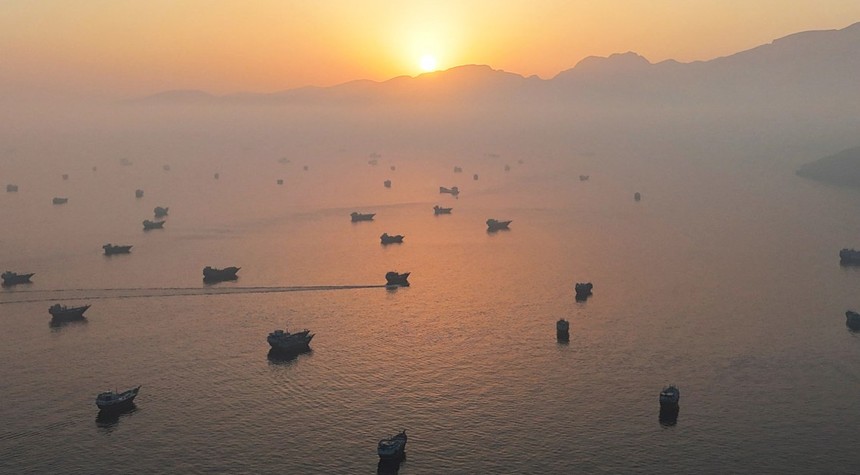
The United States military conducted a second round of strikes against Iranian targets Saturday evening, escalating a dangerous cycle of retaliation that threatens to unravel a ceasefire agreement signed just one week ago.
U.S. Central Command announced the strikes came at the direct order of President Donald Trump, targeting multiple Iranian military installations including missile and drone storage facilities and coastal radar sites. The action followed Iran’s earlier attacks Saturday against what Tehran described as targets linked to American forces in the region.
The current crisis began Thursday when Iranian forces launched at least four drones at commercial vessels transiting the Strait of Hormuz. One drone struck the upper deck of the M/V Ever Lovely, a Singapore-flagged cargo ship traveling along the Omani coast. American forces intercepted three additional drones. The vessel sustained damage but remained operational, with no injuries reported among the crew.
Iran’s actions Thursday prompted the first American response Friday, when the Pentagon launched strikes against Iranian military sites in what officials characterized as a direct response to aggression against commercial shipping. The Pentagon stated that Iran was given an opportunity to honor the ceasefire agreement following those strikes but chose instead to escalate.
Saturday’s Iranian retaliation included a drone attack on Bahrain, home to the U.S. Navy’s Fifth Fleet. Bahraini officials condemned what they termed a flagrant violation of their sovereignty and a blatant threat to the security of their citizens and residents. Iran’s statement Saturday criticized Gulf states for allowing their territory to be used for what Tehran called hostile actions against the Islamic Republic.
President Trump addressed the situation in stark terms Saturday evening, warning that if Iran does not learn from these exchanges, the United States will be forced to militarily complete the job that was successfully started. The president went further, stating that the Islamic Republic of Iran will no longer exist if such actions continue.
The underlying dispute centers on Iranian demands that commercial shipping use specific routes through Iranian waters when transiting the Strait of Hormuz, one of the world’s most critical maritime chokepoints. Iran’s anger over vessels traveling outside Tehran’s designated corridors has created a flashpoint with profound implications for global commerce and regional stability.
The memorandum of understanding signed one week ago was intended to begin the process of bringing this conflict to a close. That agreement now appears increasingly fragile as both nations engage in tit-for-tat military actions with no clear path toward de-escalation.
The Pentagon has characterized Iran’s actions as clear violations of the ceasefire and dangerous behavior that undermines freedom of navigation in international waters. The situation presents the Trump administration with difficult choices as it seeks to protect American interests and allies while avoiding a broader regional conflict.
The international community watches with concern as tensions in the Persian Gulf reach levels not seen in recent memory, with the potential for miscalculation carrying grave consequences for global energy markets and regional security.
Related: United States Leads International Response to Venezuelan Earthquake Disaster