
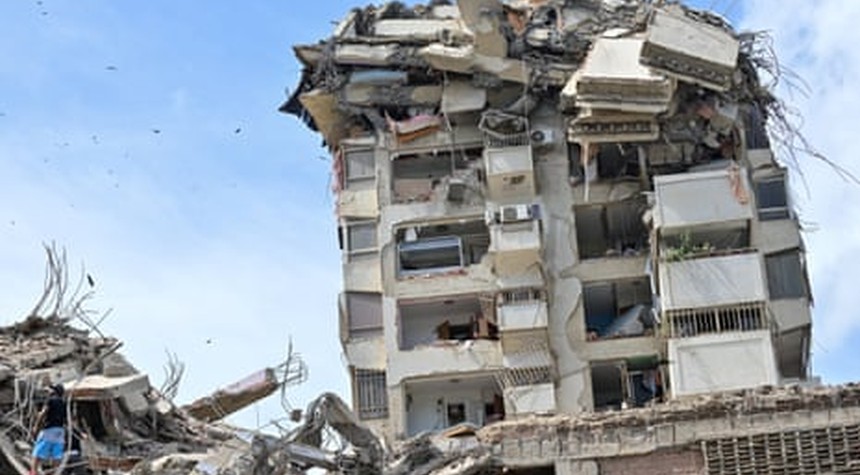
The world watches with grave concern as rescue teams converge on Venezuela’s shattered northern coastline, where twin earthquakes struck within forty seconds of each other late Wednesday afternoon, reducing dozens of buildings to rubble and leaving thousands feared dead.
The magnitude 7.2 and 7.5 earthquakes struck the densely populated coastal region near Caracas, Venezuela’s capital, with devastating effect. The nation’s primary international gateway, Simón Bolívar International Airport, sustained severe damage, complicating what is already an extraordinarily challenging rescue operation.
Secretary of State Marco Rubio announced that the United States Defense Department would deploy search and rescue teams to the affected areas. Speaking to reporters, Rubio emphasized the urgency of the situation, noting that the next seventy-two hours represent what rescue professionals call the “golden window” for saving lives.
“They have collapsed buildings and will need substantial help digging through that rubble,” Rubio stated. “In search and rescue operations, you are attempting to reach people while you can still save their lives when they are buried under debris.”
The coastal cities of La Guaira, Catia La Mar, and Caraballeda bore the brunt of the destruction. Multiple high-rise tower blocks collapsed entirely, leaving families desperately searching for missing relatives. In several cases, entire families of four or five people remain unaccounted for.
Acting President Delcy Rodríguez declared the La Guaira region a disaster zone in a televised address, calling the situation “an utter tragedy.” The capital city of Caracas also suffered significant damage, with buildings collapsing in the Altamira and Los Palos Grandes neighborhoods.
By Thursday afternoon, official reports confirmed one hundred eighty-eight deaths, with one hundred fifty-seven people still missing. However, given the scale of destruction, those numbers are expected to rise substantially.
Tom Fletcher, head of the United Nations humanitarian agency, pledged full mobilization of international resources. The agency reported that more than one hundred buildings collapsed in the La Guaira region alone, including the Ritasol Palace apartment complex and the seafront Eduard’s Hotel. Among the missing are children as young as five and elderly residents.
The earthquakes’ power was felt over one thousand miles away in Manaus, Brazil, forcing residents to evacuate their homes. As aftershocks continued to rattle northern Venezuela throughout Thursday, the international community rallied to support a nation already weakened by years of economic crisis and political turmoil.
French President Emmanuel Macron announced the immediate deployment of eighty-five specialized rescue personnel, stating that France stands ready alongside European partners to assist affected populations. Brazilian President Luiz Inácio Lula da Silva expressed deep concern for the Venezuelan people, who have demonstrated remarkable resilience through previous hardships.
This disaster strikes a nation ill-equipped to handle such a catastrophe. Venezuela’s infrastructure and emergency services have been severely degraded by years of economic mismanagement and political instability. The international response, therefore, becomes not merely helpful but essential to saving lives in the critical hours ahead.
The coming days will test the resolve and capability of international humanitarian cooperation as rescue teams work against time to locate survivors trapped beneath tons of concrete and steel.
Related: Venezuela Hit by Rare Dual Earthquakes Measuring 7.2 and 7.5 Magnitude