
Speaking before global leaders assembled in Davos, Switzerland, Ukrainian President Volodymyr Zelenskyy delivered a stark assessment of European military readiness that underscored a fundamental shift in transatlantic security arrangements.
“Europe needs to know how to defend itself,” Zelenskyy stated plainly, his words carrying the weight of a leader whose nation has spent nearly three years in existential conflict with Russia. The Ukrainian president’s remarks acknowledged what many defense analysts have observed for years: the continent remains unprepared to guarantee its own security without substantial American support.
This is not a new concern, but rather the culmination of decades of strategic choices. Since the end of the Cold War, European nations have consistently underfunded their military establishments, comfortable in the knowledge that American power stood ready to defend them through the NATO alliance. European contributions to conflicts in Afghanistan and Ukraine, while significant, have operated under the assumption that Washington would provide the ultimate security guarantee.
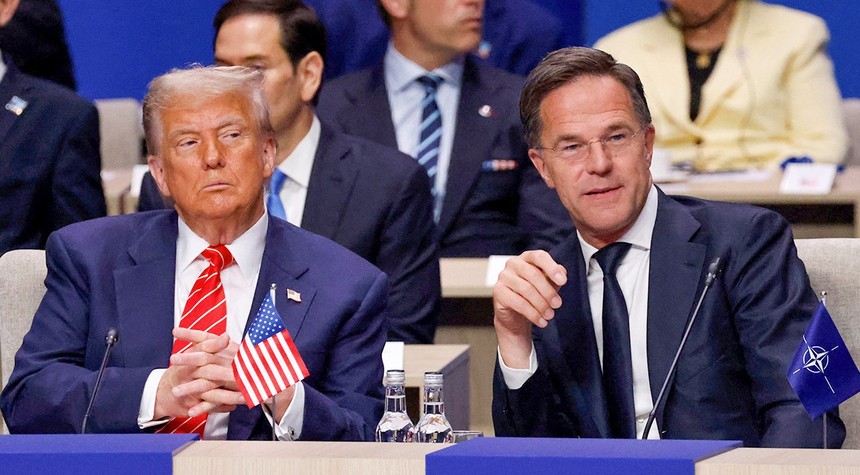
President Donald Trump has systematically challenged that assumption throughout his political career. His repeated warnings to NATO allies that American protection cannot be taken for granted have generated considerable anxiety across European capitals. The president’s recent statements about Greenland, including his initial refusal to rule out military action to secure the Danish territory, sent tremors through an alliance already questioning its cohesion.
In a characteristic social media post Thursday, Trump mused about invoking NATO’s Article 5 mutual defense clause to address illegal immigration at America’s southern border, a suggestion that highlighted his fundamental questioning of alliance priorities. “Maybe we should have put NATO to the test,” he wrote, proposing that the alliance deploy to protect American borders, “thus freeing up large numbers of Border Patrol Agents for other tasks.”
Such statements have produced tangible results. European governments have pledged substantial increases in defense spending, though NATO Secretary General Mark Rutte continues to acknowledge the central role of American power, particularly the nuclear umbrella that serves as the alliance’s “ultimate guarantor.”
Barry Posen, a professor of political science at the Massachusetts Institute of Technology, provided measured analysis of this security evolution. “For much of the post-Cold War period, it is fair to say that Europeans underinvested in defense, partly because threats were low, and partly because a series of U.S. presidents did everything they could to convince Europeans that we would stay there forever,” he explained.
Posen acknowledged the validity of Trump’s critique regarding European military readiness, particularly as Russia reconstituted its military power and China expanded its global influence. However, he cautioned that creating divisions within NATO carries substantial risks at a moment when alliance unity faces genuine tests.
The facts support both perspectives. European nations have indeed relied heavily on American military power while directing resources elsewhere. Simultaneously, the strategic value of NATO to American interests remains considerable, providing forward bases, intelligence sharing, and collective security that would be costly to replicate through bilateral arrangements.
Zelenskyy’s warning represents more than diplomatic positioning. His nation’s survival has depended on Western military assistance, and he understands better than most European leaders what inadequate defense preparation means when facing a determined adversary. His call for European self-sufficiency reflects both practical necessity and recognition that American strategic patience has limits.
The question facing the alliance is whether this moment of tension will produce the fundamental restructuring of European defense capabilities that circumstances demand, or whether it will fracture an arrangement that has preserved peace in Europe for three quarters of a century.
Related: Zelenskyy Says Security Agreement with United States Ready for Signature