
LAEM CHABANG, Thailand — After 286 days at sea, the USS Abraham Lincoln aircraft carrier arrived Wednesday at this eastern Thai port, bringing to temporary conclusion what military officials describe as one of the longest continuous naval deployments in recent American history.
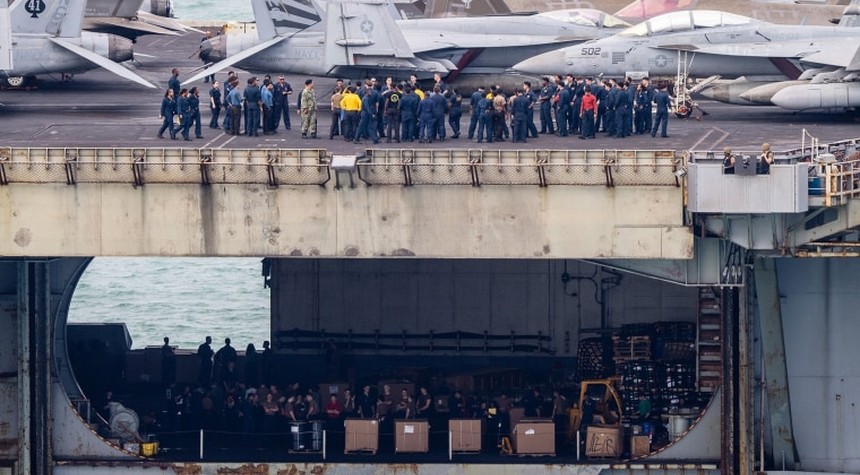
The vessel’s condition tells the story of its extended service. Paint has worn away from substantial portions of the 1,092-foot warship’s hull, revealing rust on the metal beneath. The visible deterioration serves as a testament to the demands placed upon both ship and crew during more than nine months supporting military operations in what has become an expanded conflict involving the United States, Israel, and Iran.
The Lincoln strike group’s arrival in Thailand includes the aircraft carrier itself docking at Laem Chabang Port in Chonburi province, while the destroyer USS Frank E. Petersen Jr. put in at nearby Sriracha and the guided-missile cruiser USS Robert Smalls proceeded to Map Ta Phut in neighboring Rayong province. This marks the first full port stop for these vessels since their deployment commenced in November.
Approximately 5,000 sailors and Marines will now have the opportunity for what the Navy terms “rest and relaxation” during a four-day stop before the strike group continues its journey home to San Diego. Each service member has been granted three liberty days and one day of duty aboard ship.
“Our arrival in Laem Chabang provides a well-deserved opportunity for our sailors and Marines to rest and recharge,” stated Rear Admiral Robert E. Loughran, commander of Carrier Strike Group 3. “It also underscores the strong and enduring partnership and alliance between the United States and Thailand.”
The deployment has not been without controversy. In recent weeks, concerns have mounted regarding supply shortages aboard the vessels and the toll such extended service takes on military personnel’s mental health. The Navy has faced questions about the sustainability of deployments extending well beyond the typical six to seven months that had been standard for carrier operations.
As the Lincoln appeared on the horizon after sunrise Wednesday, service members could be seen on deck preparing for disembarkation. Naval tradition was observed with a whistle ringing across the deck, signaling the coming ashore of the crew. By early afternoon local time, sailors and Marines began leaving the ship in civilian clothes, some carrying backpacks, others with recreational equipment. Dozens of vehicles, including Ford pickup trucks and buses, stood ready in organized columns to transport them.
The nearby coastal resort city of Pattaya stands to benefit economically from this visit. Local officials estimate the American presence will inject approximately three million dollars into the regional economy. This arrives at a fortuitous moment for the tourism-dependent area, which has seen international visitor numbers decline due to travel disruptions and increased fuel costs stemming from the ongoing Middle East conflict.
The Lincoln’s extended deployment reflects broader strategic realities facing American military planners. As tensions persist in the Middle East and the Navy maintains its commitment to supporting allied operations, questions remain about the long-term sustainability of such extended carrier deployments and their impact on fleet readiness and personnel retention.
For now, however, these considerations take a brief pause as thousands of American service members step onto Thai soil for the first time in nearly ten months.
Related: Liberal Party Sweeps Canadian Byelections Amid US Trade Tensions