
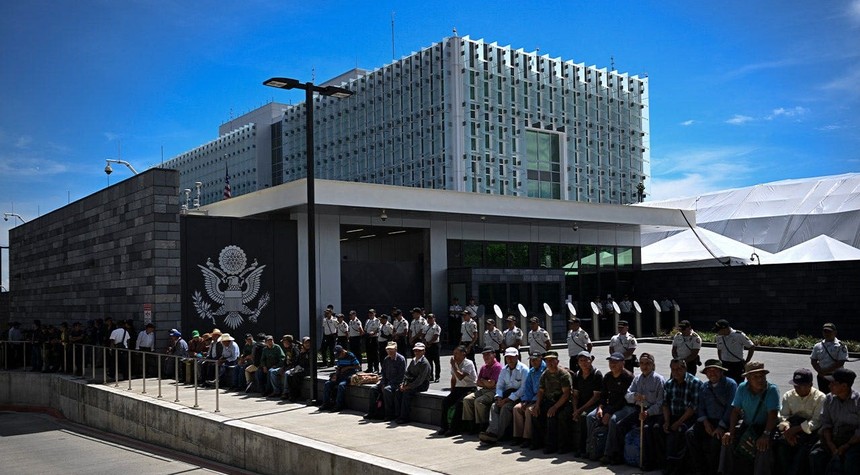
A construction company responsible for building American diplomatic facilities across the globe has filed suit against the federal government, seeking more than $461 million in compensation for work performed under extraordinary circumstances during the COVID-19 pandemic.
B.L. Harbert International, which has constructed dozens of United States embassies and consulates over the past two decades, submitted its complaint Wednesday to the U.S. Court of Federal Claims. The lawsuit represents the culmination of a dispute spanning three presidential administrations and touches upon fundamental questions about the government’s obligations to its contractors.
The facts of the case are straightforward. In 2020, during the first Trump administration, the State Department directed Harbert to continue construction on diplomatic facilities worldwide despite the pandemic. The company complied, maintaining operations across 12 projects on four continents, including facilities in Turkey, Iraq, Thailand, Morocco, Mexico, and Central America.
According to the complaint, career officials at the State Department reached a $370 million settlement agreement with Harbert in September 2025 to address claims arising from those pandemic-era directives. The government paid just over half a million dollars of that sum before the agreement was abandoned.
Harbert alleges that political leadership intervened after the settlement had been finalized, with the decision to reverse course coming from the highest levels of government. The company now seeks full recovery of the original settlement amount plus additional damages.
Charles Bohn, president of B.L. Harbert’s International Group, emphasized the company’s reluctance to pursue legal action. “We did not want to take this step,” Bohn stated. “The U.S. Government is an important partner, and we are proud of the work we do together to advance America’s interests and protect Americans serving overseas. But we have a responsibility to our employees and to the future of that mission.”
The case highlights a concerning reality about America’s capacity to build and maintain secure diplomatic facilities abroad. Harbert operates within a remarkably small pool of contractors capable of handling such specialized work. Building secure embassies and consulates requires not merely construction expertise but specialized security clearances, thoroughly vetted workforces, and the ability to manage complex international supply chains under difficult conditions.
The shrinking contractor base presents national security implications. According to Harbert, some State Department embassy projects now attract merely two or three qualified bidders. This limitation constrains the government’s flexibility and potentially increases costs for future diplomatic construction.
The Trump administration has made accountability in government contracting a priority, recently uncovering $1.2 billion in suspected COVID-era contract fraud tied to spending from the previous administration. This lawsuit, however, presents a different scenario: a contractor seeking payment for work performed at the government’s explicit direction.
The case will proceed through the Court of Federal Claims, where contractors pursue monetary claims against the federal government. The outcome will likely influence how future administrations manage contractor relationships during national emergencies and whether political appointees may appropriately intervene in settlement agreements reached by career officials.
For now, the matter rests with the courts, where facts and contractual obligations will determine whether the government must honor the settlement its own officials negotiated.
Related: High-Speed Train Collision in Central Spain Claims 68 Lives